Fly fishing flies fall into a handful of categories, and each one imitates a different food source that fish eat. Dry flies float on top, nymphs sink below the surface, streamers mimic baitfish, and terrestrials copy land bugs that have fallen into the water. The main difference between them? Where they fish and what they look like to the trout, bass, or panfish you're targeting.
This guide covers the main types of fly fishing flies, explains what each fly type imitates, when to use them, and how to figure out what fly to use for your fishing adventure.
Key Takeaways
| Fly Type | What It Imitates | Where It's Fished | Best For |
|---|---|---|---|
| Dry Flies | Adult insects at surface | Surface of the water | Trout, rising fish |
| Nymphs | Underwater insect larvae | Bottom/mid-water | Trout (most of their diet) |
| Streamers | Baitfish, minnows | Underwater, actively | Bass, large trout |
| Terrestrials | Land bugs (hoppers, ants) | Surface | Trout, panfish |
| Poppers | Frogs, bugs | Surface with action | Bass, panfish |
Use this as a quick reference when you're shopping for flies or standing streamside trying to decide what to tie on. The general rule: if fish are rising to the surface, use dry flies or terrestrials. If they're not, go subsurface with nymphs or streamers.
Dry Flies (Surface Flies)
Dry fly patterns imitate adult flying insects that have hatched from their nymph stage and now float or hover at the surface of the water. Aquatic insects spend most of their lives underwater as nymphs. When they're ready to become adults, they swim to the surface, break through the film, dry their wings, and fly away. That moment when they're sitting on the water is when trout key in on them.

Here are the three main insects dry flies copy and their silhouettes:
- Mayflies have upright wings like little sailboats.
- Caddis flies fold their wings tent-style over their bodies.
- Stone flies lay their wings flat along their backs.
The fly pattern you choose should match the general shape of whatever's hatching (when bugs emerge from the water in large numbers).
This fly category is the most visually exciting because you actually watch fish rise up and take your fly off the top. There's nothing quite like seeing a trout sip your fly off the water.
When and How to Fish Dry Flies
Dry fly fishing works best during active hatches when you see bugs on the water and fish rising. Prime conditions include calm water, warmer months, and the low-light periods of morning and evening. Overcast days can extend good dry fly fishing into midday.
Look for "rises" where trout break the surface. That's your signal they're eating bugs on top and will likely eat your fly if it imitates what's hatching. A gentle sipping rise usually means small insects. A splashy rise often indicates larger bugs or caddis flies.
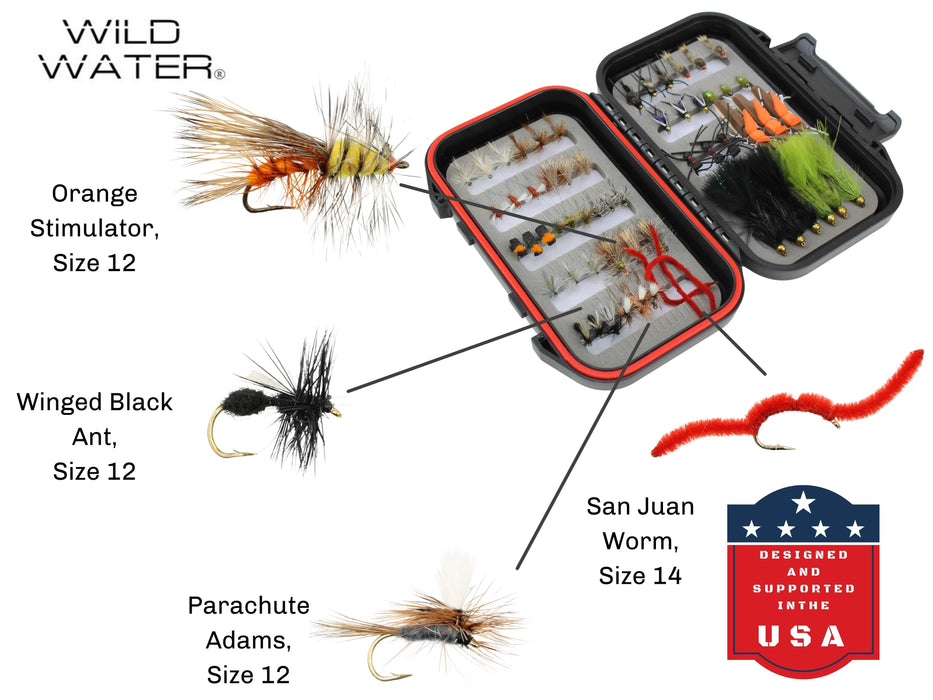
Cast upstream and let your dry fly drift naturally without drag (the unnatural movement caused when your line pulls the fly faster than the current). The Parachute Adams and Elk Hair Caddis are proven dry fly patterns that work on most waters because they're general imitations rather than exact copies of specific bugs. Add a Stimulator in sizes 10-12 for bigger water or low light conditions.
Every fly angler needs at least one mayfly pattern, one caddis pattern, and one stone fly pattern in different sizes. Check out our guide on how to fish a dry fly for more detail.
Nymphs (Underwater Flies)
Nymph flies imitate the larvae and immature stages of aquatic insects living on rocks, in vegetation, and along the streambed. Mayfly nymphs, caddis larvae, stone fly nymphs, and midges all spend months or even years underwater before hatching. That's a long time for fish to get used to eating them.

Nymphs represent a major food source for trout because these bugs are always available underwater. Adult insects only appear during hatches, which might last a few hours. But nymphs? They're down there 24/7, tumbling in the current, drifting past hungry fish. This is why trout feed subsurface roughly 80-90% of the time, and why nymph fishing consistently catches more fish than any other method.
Unlike dry flies, nymph patterns don't have wings. They're designed to sink and tumble naturally along the bottom where the food is most abundant. Many have bead heads that add weight and a little flash to attract attention.
When and How to Fish Nymphs
Use nymphs when fish aren't rising to the surface. They're effective year-round, especially in cold water when hatches are sparse and fish aren't willing to move far for food.
Nymph fishing requires weight on the fly or leader and often a strike indicator (a small float that signals when a fish takes your fly). The indicator is necessary because strikes are subtle. Fish inhale the nymph and spit it out in a fraction of a second. Without visual help, you'll miss most takes.
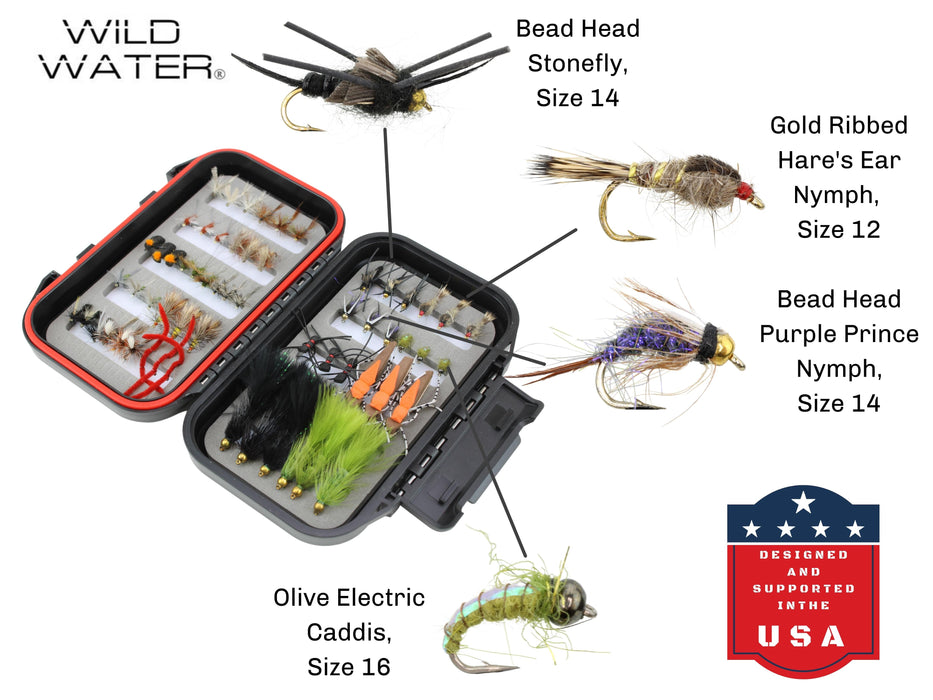
The Pheasant Tail, Hare's Ear, and Prince Nymph are proven patterns every fly fisherman should carry in sizes 12-18. Add a Copper John for fast-sinking versatility. Bead head versions sink faster and the flash attracts fish holding near the bottom. For a more technical approach, check out our euro nymphing setup guide.
Aside from our nymph patterns, grab a nymph assortment to cover your bases.

Streamers (Streamer Flies)
Streamers imitate small fish, leeches, crayfish, and other protein-rich food sources that larger fish hunt. We're talking minnows, sculpins, darters, and anything else that swims and makes a decent meal. Streamer flies are built with flashy materials like marabou feathers and tinsel to catch a fish's attention and trigger predatory strikes.
Unlike flies that imitate insects, streamers represent a substantial meal. A trout might eat a hundred mayflies to fill up. Or it can eat one minnow and call it lunch. Larger fish learn this math quickly. That's why streamers tend to catch bigger fish than tiny dry flies or nymphs.

The flash and movement provoke a reaction strike. Fish hit streamers out of instinct as much as hunger. When you want to catch something memorable, tie on a streamer.
When and How to Fish Streamers
Fish streamers actively by stripping and twitching your line to make the fly look like a fleeing baitfish. Cast across or downstream and let the fly swing in the current, then strip it back with erratic movements. Short strips, long strips, pauses. Mix it up until you find what triggers strikes.
Streamers work best for targeting large trout, bass, and pike. They shine when nothing else does because opportunistic fish can't resist an easy meal. Spring and fall are prime times when fish are feeding heavily, but streamers produce year-round.
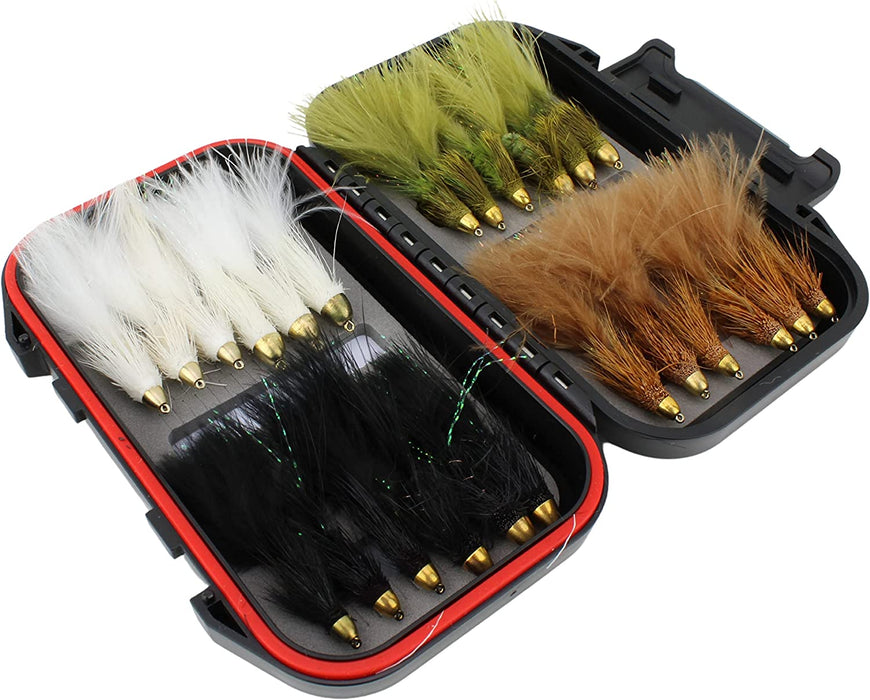
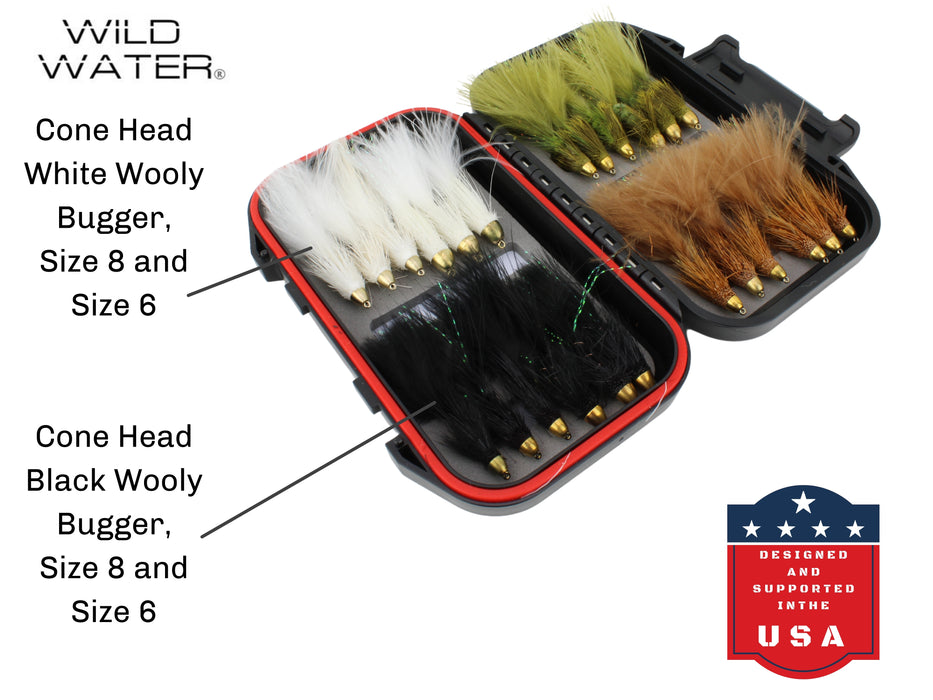
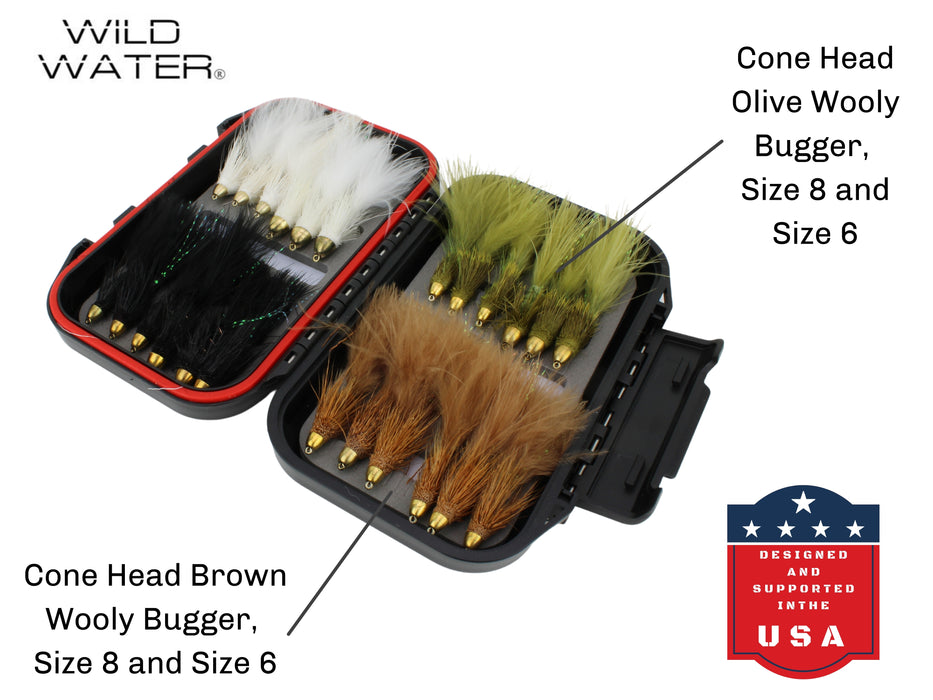
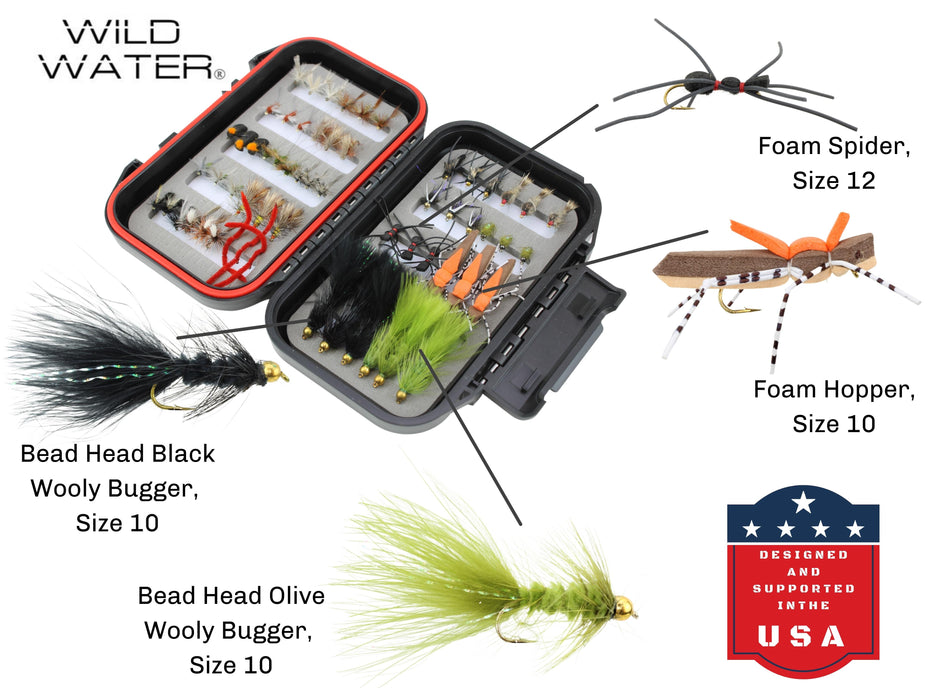
The Woolly Bugger is the most versatile streamer pattern ever designed. Black and olive in sizes 6-10 belong in every fly box. Period. If you only carry one streamer, make it a Woolly Bugger. Clouser Minnows work for both freshwater fishing and saltwater applications.
Learn more about how to fish streamers in our complete guide.
Terrestrials
Terrestrial flies imitate land-based bugs that have fallen into the water. These insects have no aquatic life stage. They're grasshoppers, crickets, ants, beetles, and spiders that accidentally end up in the water by falling off grass, getting blown by wind, or just making a bad jump.
Fish recognize these as a windfall food source and often chase them down quickly. A grasshopper splashing down on the water is like ringing a dinner bell. Big trout especially love hoppers because they're a substantial meal that doesn't require chasing tiny insects all day.

Common terrestrial patterns usually have legs but no wings. They're meant to look like bugs struggling on the surface, which triggers opportunistic feeding in fish. These flies work when aquatic insect hatches are slow, especially during the hot summer months when hoppers are everywhere.
When and How to Fish Terrestrials
Prime time is summer through early fall when grasshoppers and other bugs are active near water. If no fish are rising to aquatic hatches, try a terrestrial. You might be surprised how quickly that changes things.
Terrestrials are generally larger than dry flies, creating more commotion that attracts fish holding in deeper water or along undercut banks. When aquatic hatches are slow, these land bugs are often the only thing getting fish to look up.
Cast tight to banks and grassy edges where real terrestrials would fall in. That's where fish expect to find them. Foam hoppers and ant patterns in sizes 10-14 are effective fly choices for most situations. Chernobyl Ants cross over nicely between trout and bass fishing.
Topwater Flies (Poppers & Bass Bugs)
Topwater flies imitate frogs, large bugs, and wounded baitfish struggling on the surface. Foam poppers are the most popular style, making a "pop" sound when stripped that gets a fish's attention from yards away. Deer hair bugs offer a softer, more realistic presentation for pressured fish.

These patterns are designed to get noticed rather than perfectly imitate specific prey. The commotion triggers explosive strikes from bass and panfish. They hit topwater flies out of territorial behavior, opportunistic feeding, or pure predatory instinct. Sometimes all three.
A popper doesn't need to look exactly like a frog. It just needs to act like something worth eating. The explosion of a bass hitting a popper is addictive. Fair warning.
When and How to Fish Topwater Flies
Best for warm water species: bass, bluegill, crappies, and sunfish. Prime conditions are low-light periods at dawn and dusk when fish hunt shallow water. Overcast days extend the window. Hot, bright afternoons? Fish often move deeper and won't come up for topwater.
Work topwater flies with short strips and pauses. The "pop-and-wait" triggers strikes from fish that are watching. That pause is critical. Give them time to find it.
Cast near structure like lily pads, logs, or docks where bass ambush prey. Foam poppers in chartreuse and black are proven bass catchers. Use sizes 2-6 for bass, 8-10 for panfish. Topwater flies also work for saltwater species like stripers and redfish where traditional insect hatches don't occur.
Learn more about topwater fishing for bass in our complete guide.
Build Your Fly Box with Wild Water Fly Fishing
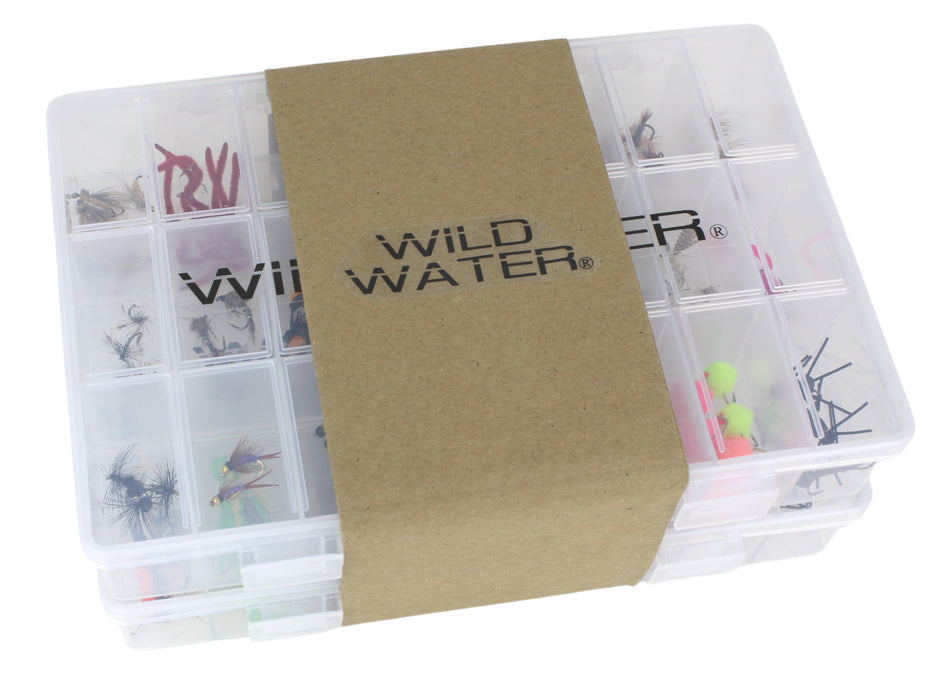
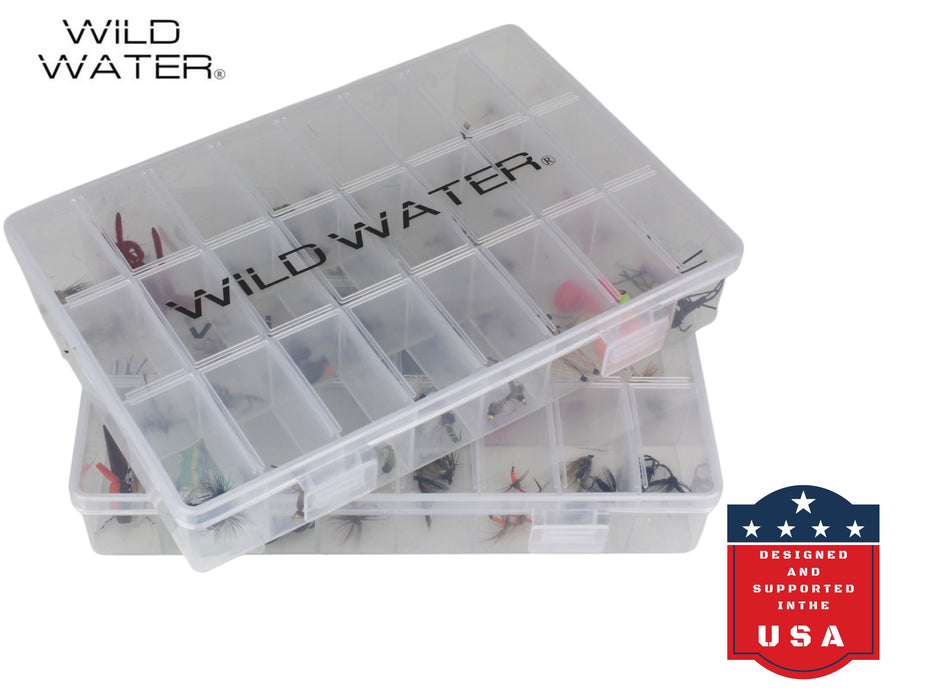
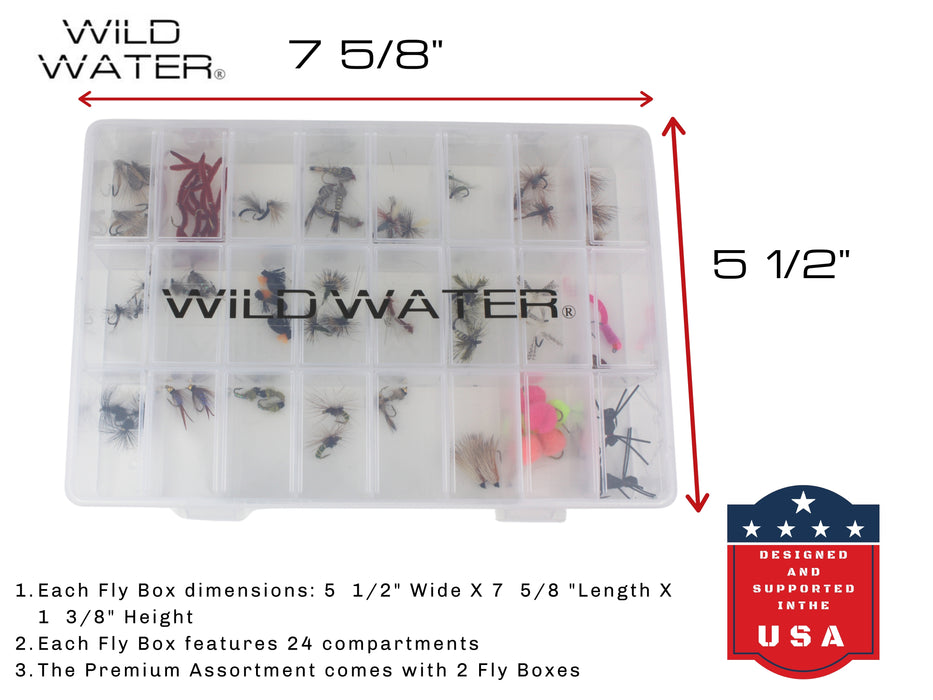
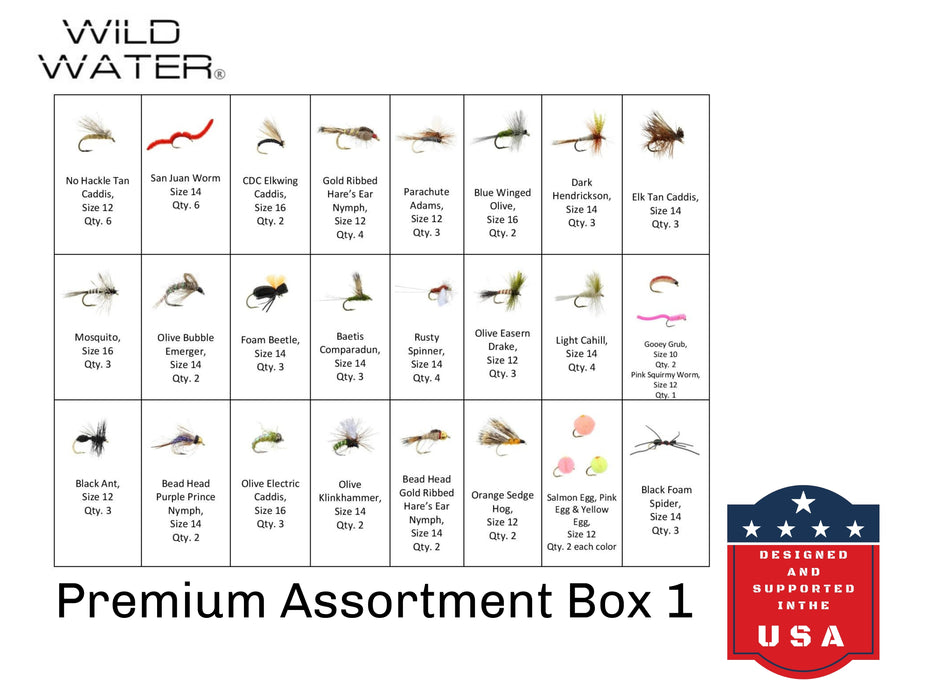
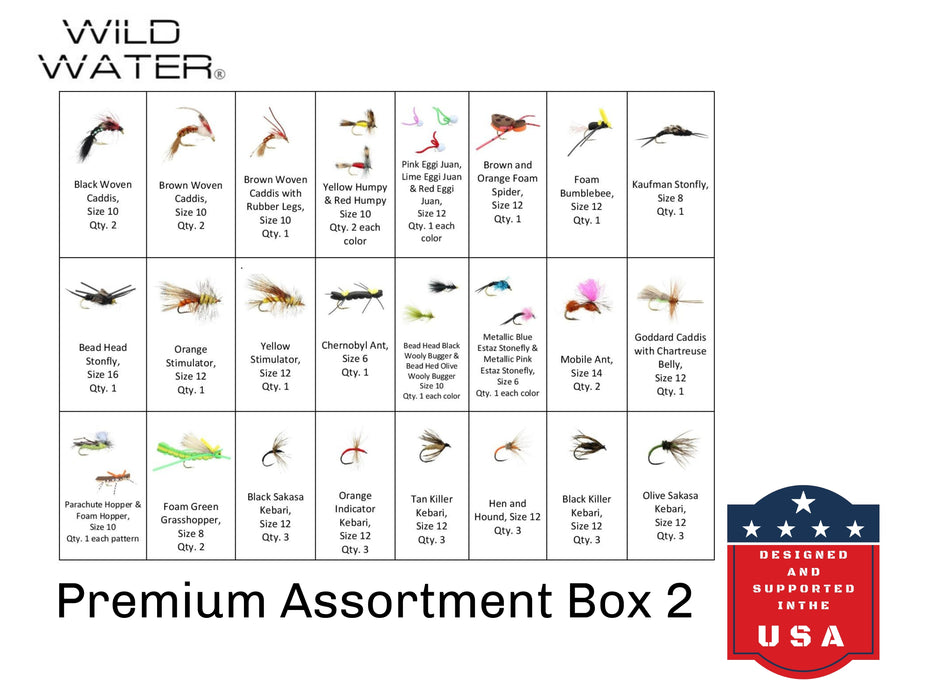
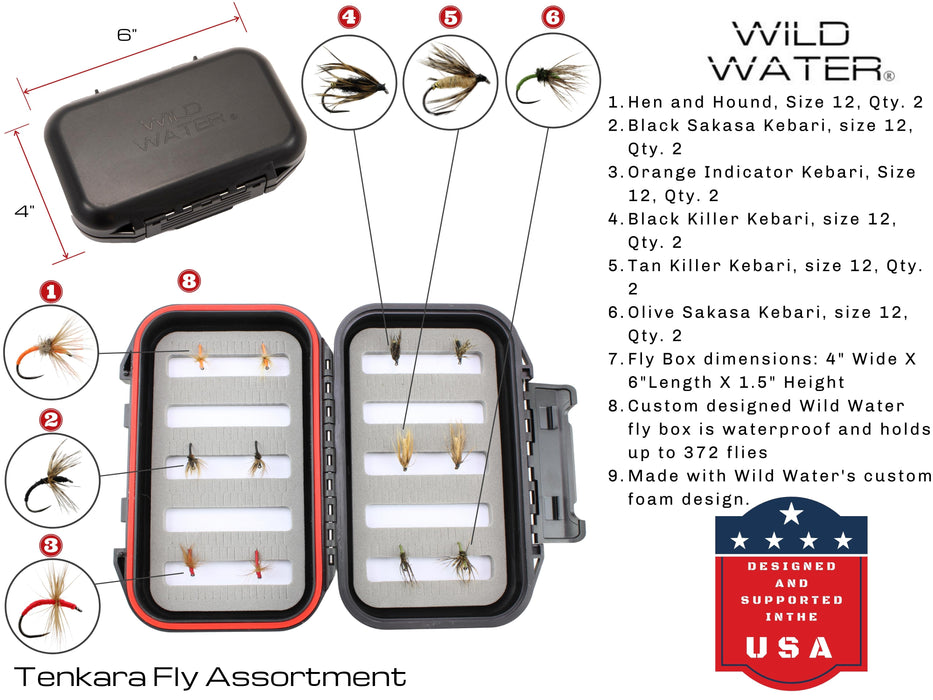
Fly selection doesn't have to be overwhelming. Instead of buying individual flies at a fly shop and guessing what you need, a curated fly assortment gives you the right flies for your water without the guesswork. Good assortments include multiple fly types (dry flies, nymphs, streamers) so you're prepared regardless of what conditions you find.
Wild Water's fly assortments are curated specifically for beginner fly anglers who want quality flies without the overwhelm. Our flies are hand-tied and tested on real waters. They're the same patterns we recommend to new fly fishers starting their fishing adventure. Nothing gets in the box unless it catches fish.
When you're selecting the right fly, think about what fish eat where you'll be fishing. Then make sure you have options that cover surface feeding, subsurface feeding, and streamer fishing. An assortment handles that for you. For species-specific recommendations, check out our guides on best trout flies and best bass flies.
Free shipping makes stocking your fly box affordable. And our U.S.-based team is here to help you choose the right flies for your water. Check out our best-selling flies to see what other anglers are catching fish on. Our fly fishing starter kits include everything you need to get on the water if you're new to fly fishing entirely.
FAQs About Types of Fly Fishing Flies
Can I use the same flies for trout and bass?
Some patterns cross over, but trout flies and bass flies serve different purposes. Trout flies imitate smaller insects while bass flies are larger and create more commotion. That said, Woolly Buggers and terrestrials work for both species. A size 8 black Woolly Bugger catches trout and bass equally well.
How do I know which fly the fish will eat?
Start by observing the water for insect activity. If bugs are on the surface, try a dry fly pattern that matches their size and color. If nothing's hatching, start with a nymph since fish feed underwater most of the time. Watch for rises (fish breaking the surface) as your signal to go dry.
Do fly colors matter more than fly type?
Fly type matters most because it determines where your fly fishes (surface vs underwater). Within each category of fly, match the general size and color of natural food sources. When unsure, darker flies work in dark water and lighter flies in clear water. Size usually matters more than exact color.
How often should I change flies while fishing?
If you haven't had any interest after 15-20 casts, try a different fly pattern or size. Change fly types (dry to nymph, or vice versa) if fish aren't responding to your current approach. Sometimes moving from a size 14 to a size 16 makes all the difference.