
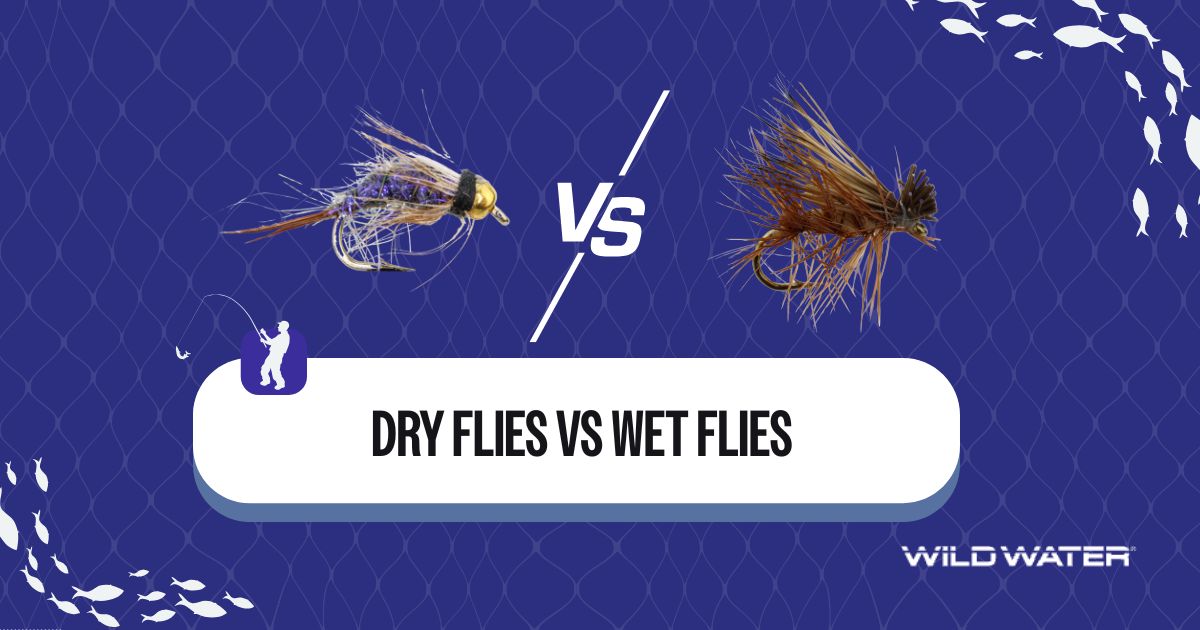
Dry Flies vs Wet Flies: Understanding the Difference in Fly Fishing
|
|
|
Time to read 9 min
|
|
|
Time to read 9 min
Dry flies float on the surface and imitate adult insects, while wet flies sink beneath the surface and imitate 80% of a trout's diet. Wet flies include nymphs, streamers, and traditional patterns like Woolly Bugger, Hare's Ear, and Soft Hackles. Dry flies include mayfly imitations, caddis patterns, and terrestrials like Adams, Elk Hair Caddis, and Grasshopper patterns.
Dry flies create visual excitement when trout rise to take them. Wet flies fish beneath the surface where trout feed 80% of the time. Choosing the right fly type increases catch rates by 60% during matching conditions on the water.
Dry flies float on water surface, while wet flies sink beneath surface to target feeding zones.
| Aspect | Dry Flies | Wet Flies |
|---|---|---|
| Position | Float on water surface | Sink beneath water surface |
| Visibility | Provide visual strikes | Require strike detection methods |
| Strike Detection | Watch for surface rises | Feel through line tension |
| Best Conditions | Calm water with surface activity | High water with no visible rises |
| Limitations | Ineffective in rough water | Harder to detect subtle strikes |
Dry flies imitate adult insects like mayflies, caddisflies, stoneflies, and midges on the water surface, creating visual excitement when trout rise to take them. Wet flies imitate subsurface food sources like nymphs, larvae, baitfish, and aquatic worms that make up 80% of a trout's diet.
Each approach maximizes success in specific conditions and trout feeding patterns.
Dry flies imitate adult insects, float on the surface, and provide visual strikes during surface feeding periods. These patterns represent the final stage of aquatic insect life cycles including mayflies, caddisflies, stoneflies, and terrestrials. The design features stiff hackle fibers and buoyant materials that keep them riding high on the water.
The visual aspect creates the most exciting strikes in fly fishing. Watching a trout rise and sip your fly from the surface delivers unmatched excitement. This visual connection between angler and fish creates addictive moments.
Dry fly fishing increases success rates by 70% during insect hatches when trout actively feed on the surface. Early morning and evening periods often produce the most consistent surface activity. Popular patterns include the Adams, Blue Winged Olive, and Elk Hair Caddis.
The main advantage lies in strike detection since you see every take happen. However, dry flies become less effective in rough water or when trout feed exclusively below the surface.
Wet flies sink beneath the surface, imitate subsurface food, and produce strikes year-round in all water conditions. This category includes 3 main types: traditional wet flies, nymphs, and streamers. These flies imitate the underwater life that forms 80% of a trout's diet.
Nymphs represent insect larvae like mayfly nymphs, caddisfly larvae, stonefly nymphs, and midge pupae. Streamers imitate small fish like sculpins, dace, shiners, and juvenile trout. Traditional wet flies often feature soft hackles and absorbent materials designed to sink quickly.
They swing through the current, imitating emerging insects, drowned adults, and migrating baitfish. Different types of flies provide comprehensive coverage of all fly categories. Our dry flies and nymphs collection offer proven patterns.
Wet fly fishing produces results in 90% of fishing conditions, especially when surface activity is minimal. The challenge lies in detecting subtle strikes through feel rather than sight.
Dry flies feature stiff hackle, buoyant materials, and light construction, while wet flies use soft hackle, absorbent materials, and heavier design. Dry flies feature stiff, dense hackle that traps air bubbles and creates surface tension. The hackle stands perpendicular to the hook shank, forming a supportive collar.
| Feature | Dry Flies | Wet Flies |
|---|---|---|
| Hackle | Stiff, dense, perpendicular | Soft, sparse, swept back |
| Materials | CDC, elk hair, foam | Dubbing, soft feathers |
| Wings | Upright or flat positioning | Swept back or no wings |
| Weight | Light, buoyant construction | Heavier, designed to sink |
| Hook | Fine wire hooks | Standard to heavy wire hooks |
Wings on dry flies typically angle upward or lie flat along the body. Wet flies use soft, sparse hackle that moves naturally underwater. These materials absorb water and help the fly sink quickly into the feeding zone.
The float test provides instant identification in 3 seconds or less. Drop the fly in a glass of water and observe the results. Dry flies float immediately on the surface without any treatment.
Wet flies sink quickly to the bottom. Their absorbent materials and heavier construction pull them down naturally. Visual cues provide additional identification help since dry flies appear fuller and bushier.
Check our guide on selecting the right fly for detailed identification tips. Browse our complete flies collection to see examples of each type. You can also review a helpful breakdown of common fly-fishing terms in this fly fishing terminology guide to better understand the wording used across different patterns and techniques.
The Adams imitates 5 different mayfly species with its gray body and mixed hackle. Elk Hair Caddis excels during caddisfly hatches with its buoyant elk hair wing and palmered hackle body.
Blue Winged Olive matches baetis mayflies found in most trout streams. Its olive body and gray wings provide excellent visibility for both angler and trout. To dive deeper into selecting patterns for specific hatches and conditions, explore our complete guide to the best dry flies for trout, which covers seasonal recommendations and sizing strategies.
Woolly Bugger tops every wet fly list with its versatility as both nymph and streamer. The marabou tail creates lifelike movement that triggers strikes from aggressive trout.
Soft hackle patterns like Partridge and Orange, Starling and Herl, and Grouse and Green imitate emerging insects. Traditional wet flies such as Royal Coachman, March Brown, and Light Cahill combine attraction and imitation elements with bright colors.
Nymphs represent larval stages of aquatic insects including mayflies, caddisflies, stoneflies, and midges before they emerge as adults. Patterns like Hare's Ear, Prince Nymph, and Pheasant Tail imitate these subsurface food sources.
Trout feed on nymphs 80% of the time, making these patterns consistently productive. They work especially well during pre-hatch periods when insects drift in the current. Whether you're fishing nymphs, dry flies, or streamers, understanding how to fly fish for trout with the right techniques for each fly type will significantly improve your hookup rates in different water conditions.
Explore our trout flies collection, attractor flies, and streamers collection for proven patterns.
Dry fly fishing provides visual strikes and surface action excitement during insect hatches. Watch your fly constantly and set the hook immediately when a trout rises.
| Aspect | Details |
|---|---|
| Pros | Provide visual strikes, create surface excitement |
| Cons | Less effective in high water conditions |
| Best Conditions | Calm water, insect hatches, evening rises |
| Presentation | Cast upstream, maintain natural drift |
| Strike Detection | Watch for rises and surface splashes |
Cast upstream and allow natural drift with the current. Avoid drag by mending your line and matching water speed.
The main limitation occurs in high or muddy water when trout won't rise to the surface. Wind also reduces accuracy by 40% by preventing accurate casts and natural presentations.
Use dry flies during insect hatches, calm evening conditions, or visible rising fish. Early morning and late evening typically provide the best dry fly action.
Wet fly fishing covers subsurface feeding zones where trout spend most of their time. This technique works in 90% of fishing conditions regardless of surface activity.
| Aspect | Details |
|---|---|
| Pros | Work year-round, cover subsurface zones |
| Cons | Require tactile strike detection |
| Best Conditions | High water, winter, no surface activity |
| Presentation | Cast downstream swing, maintain active retrieve |
| Strike Detection | Feel for line tension changes |
The downstream swing method allows natural movement with the current while maintaining tension for strike detection. Cast across or slightly downstream and let the current work.
Strike detection becomes more challenging without visual cues. Watch for subtle line movements, sudden stops, or tension changes.
Wet flies excel in high water, winter months, or no surface activity. They're particularly effective in deeper pools and runs.
Nymphing produces the most consistent results because it targets the primary food source in a trout's diet. This technique works effectively year-round.
| Aspect | Details |
|---|---|
| Pros | Most productive method, year-round success |
| Cons | Require precision, challenging strike detection |
| Best Conditions | Any water condition, pre-hatch periods |
| Presentation | Maintain dead drift, control proper depth |
| Strike Detection | Watch indicator or feel tight-line contact |
Indicator nymphing uses a strike indicator to detect subtle takes. Position the indicator at twice the water depth and watch for any unusual movement. Tight-line nymphing eliminates the indicator and relies on feeling strikes through direct contact.
This method provides better sensitivity but requires more skill to master effectively. The precision challenge involves getting flies to correct depth and maintaining natural drift. Weight adjustment and leader length modifications help achieve proper presentation.
Learn more about specific techniques in our guides: fishing with a dry fly, fishing with nymphs, fishing with streamers, and basic fly fishing skills.
Make dry flies float longer by applying floatant gel, drying them with desiccant powder after each catch, and using hydrophobic fly treatment before fishing. Keep the fly dry by false casting to remove water. Replace or re-treat flies when they begin to sink.
A dry fly sinks when it absorbs water, loses floatant, or accumulates fish slime. Improper storage, damaged hackle, or wrong fly size also reduce buoyancy. Keep flies floating by applying floatant regularly, drying them with desiccant, and replacing damaged flies.
The best fly floatant matches your fishing conditions. Gel floatants like Gink work well on new dry flies, powder desiccants such as Frog's Fanny revive soaked flies, and spray or dip floatants coat larger patterns. Use gel for dry storage, powder for on-water drying, and spray for coverage.
You need to put floatant on dry flies to keep them buoyant. Dry flies naturally absorb water and sink without treatment. Gel floatants are applied before fishing, while desiccant powders revive flies after catching fish. Consistent floatant use ensures longer flotation and better presentation.
Match your wet and dry fly choice to current water conditions and observed trout feeding behavior.
Surface activity calls for dry flies, while subsurface feeding requires wet flies or nymphs. Dry flies work best during hatches, while wet flies excel in high water conditions.
Start with our fly fishing kits that include balanced selections of wet and dry flies. Check our complete beginners guide to fly fishing for comprehensive instruction.
{"one"=>"Select 2 or 3 items to compare", "other"=>"{{ count }} of 3 items selected"}


