A fly reel does more than hold your line. It controls how line comes off the spool during a cast, applies resistance when a fish runs, and keeps everything organized so you're not fighting tangles while you should be fighting fish. Knowing what each part is called helps when you're loading line, adjusting drag, changing retrieve direction, or troubleshooting problems on the water.
Frame
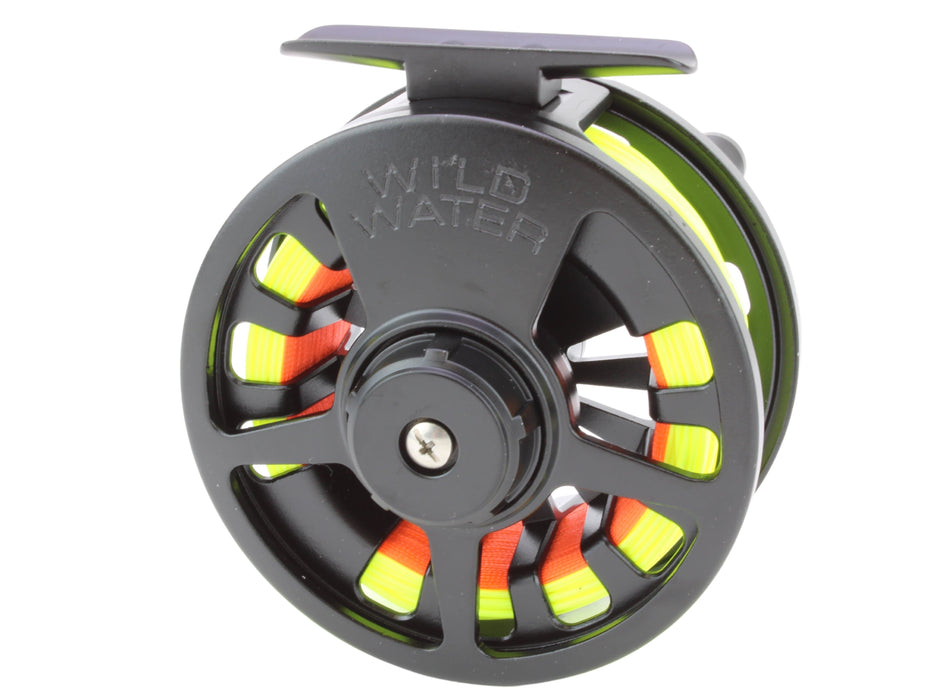
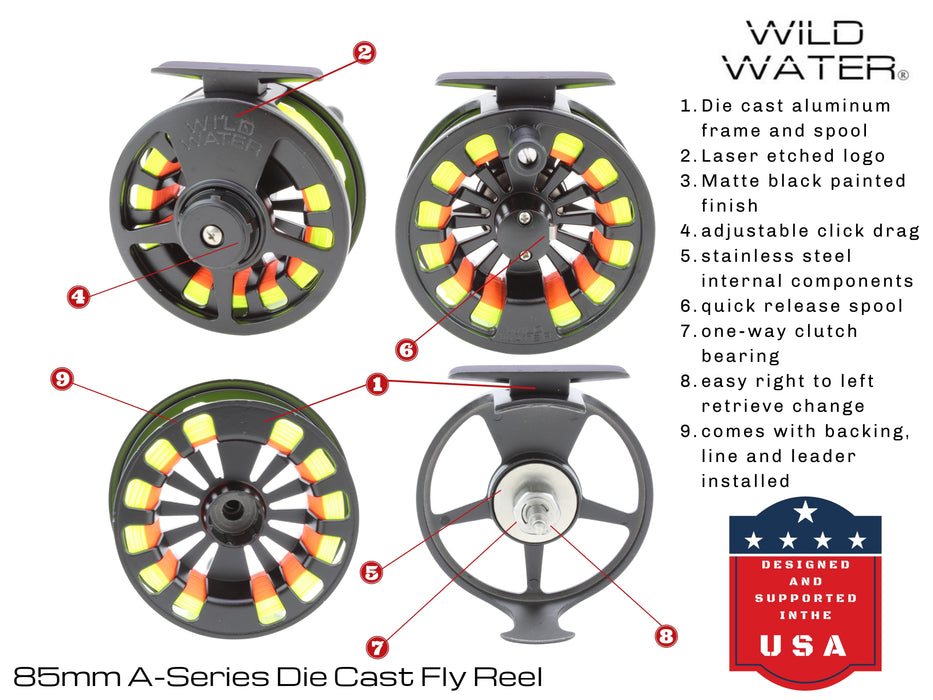
The frame is the main body of the reel. It holds all the internal components together and attaches to your rod through the reel foot. Most frames are made from machined aluminum (on higher-end reels) or die-cast aluminum (on starter reels). The frame needs to be rigid enough to stay true under pressure but light enough that it doesn't throw off the balance of your rod.
On the frame, you'll find the spool release mechanism and usually the drag knob. Some frames have exposed rims that let you palm the spool for extra stopping power when a big fish makes a run.
Reel Foot
The reel foot is the flat, tapered piece that extends from the bottom of the frame. It slides into the reel seat on your fly rod and gets locked in place by the threaded hood. The foot needs to fit snugly so the reel doesn't wobble or shift during casting. If you're buying a reel separately from your rod, check that the foot size matches your reel seat.
Spool
The spool is the removable cylinder that holds your backing, fly line, and leader. It spins freely inside the frame when you're stripping line out, and the drag system controls how much resistance it gives when line pulls off.
Here's something every fly angler deals with eventually: line working its way into the gap between the spool and frame. There's a small space all around the edge where the spool doesn't quite touch the frame, and sometimes your line (especially thinner tippet or leader material) slips through. This happens most often when you turn the spool backwards. It can look like a tangled mess, but the fix is simple.
This video shows how to pop the spool off to clear any tangles. On Wild Water's die-cast reels (the ones included with the 5/6 weight, 8-foot 5 weight, and 7-piece 5 weight packages), there's a small button you press to release the spool. Once it's off, you can untangle the line easily and click it back into place.
When you put the spool back on, press the release button, seat the spool onto the spindle, and make sure it clicks. You'll notice a tiny bit of in-and-out movement even when it's fully seated. That's normal. Reels can't be built with zero tolerance, so there's always a small amount of float. It's just part of fly fishing.
Arbor
The arbor is the center hub of the spool where your backing attaches. Modern fly reels typically use a large arbor design, which means the center hub has a bigger diameter. This does two things: it picks up line faster with each turn of the handle (less reeling to bring in a fish), and it stores line in wider coils that reduce memory curl.
Older or more compact reels sometimes use a mid-arbor or standard arbor design, which holds more backing but retrieves line slower.
Handle
The handle is what you grip to retrieve line. On most fly reels, it's a simple knob attached to the spool that turns the whole spool as you crank. Some reels have ergonomic or oversized handles for better grip, especially on saltwater models where you're cranking against bigger fish.
Fly reels can be set up for left-hand or right-hand retrieve. Most anglers crank with their non-dominant hand (so if you cast right-handed, you reel with your left), but it's personal preference. Wild Water reels can be switched between left and right retrieve by repositioning an internal component.
Drag System
The drag system applies friction to the spool, controlling how easily line pulls off when a fish runs. Without drag, a strong fish would strip line so fast the spool would overrun and tangle. Too much drag and you'll break your tippet.
Most fly reels use a disc drag system, where smooth discs (usually cork, carbon fiber, or synthetic material) press against each other to create resistance. You adjust the drag by turning the drag knob, usually located on the back or front of the frame. Tightening the knob increases resistance; loosening it lets line pull off easier.
A good rule for beginners: set your drag light enough that you can pull line off the reel with a firm tug. You can always tighten it during a fight if needed.
Spool Release
The spool release is the button, lever, or latch that lets you remove the spool from the frame. On Wild Water's die-cast reels, it's a small button you press while pulling the spool away. Knowing where this is matters when you need to swap spools, clear a tangle, or access the drag internals for cleaning.
Spindle
The spindle is the central post inside the frame that the spool rotates around. It's what the spool clicks onto when you seat it back in the frame. On some reels, the drag components sit on or around the spindle. Keep this area clean and occasionally apply a light lubricant if your reel instructions recommend it.
Next Steps
Now that you can identify each part of your fly reel, you're ready to mount it on your rod and load your line.
How to Attach Your Fly Reel to the Rod →
How to Change Reel Retrieve Direction →