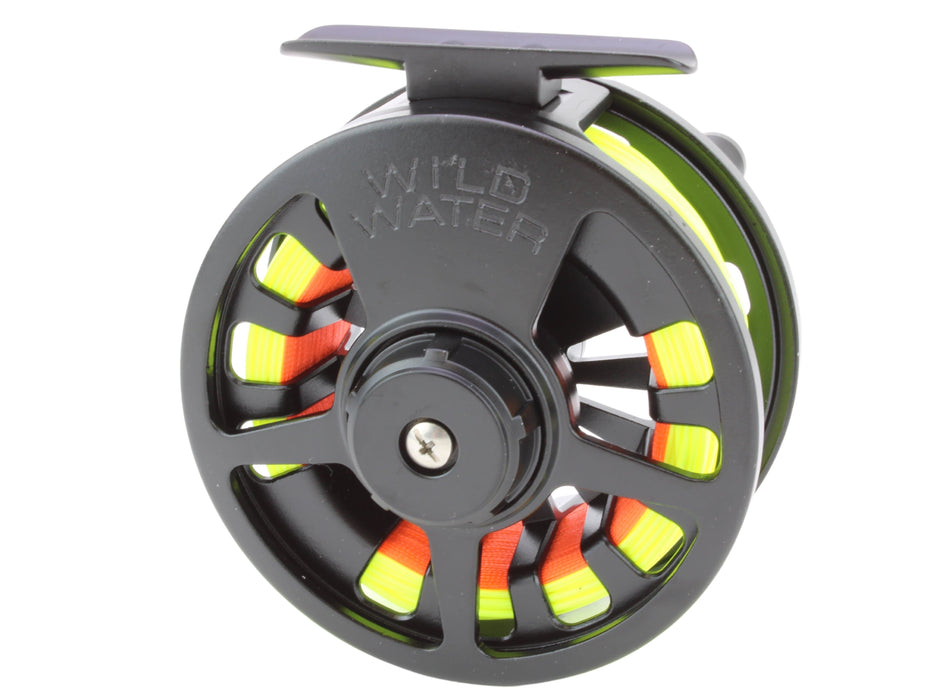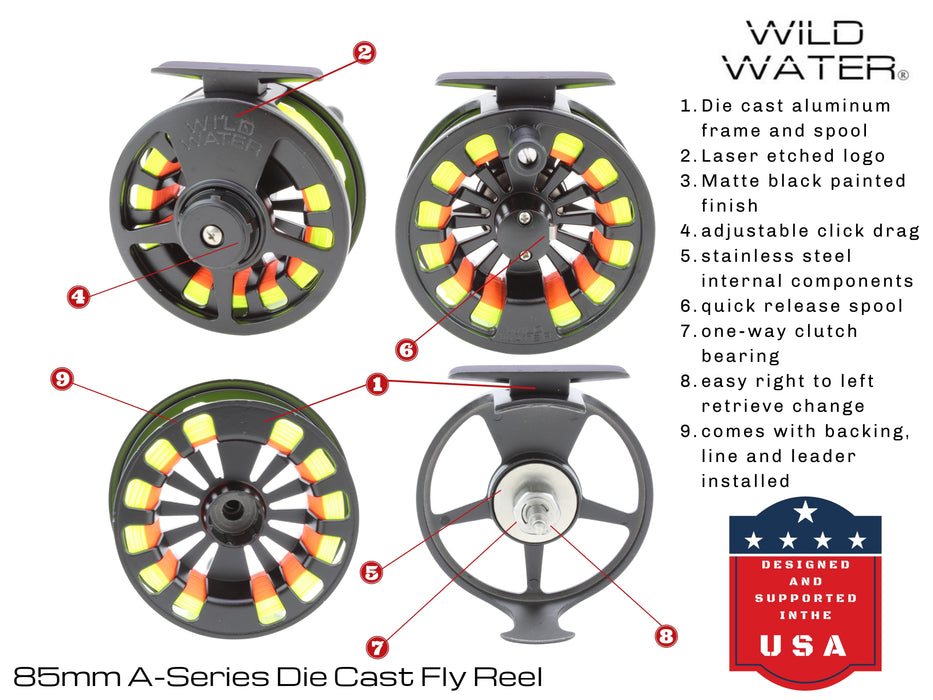
The Albright knot connects your fly line to your backing. If those terms are new to you: fly line is the thick, weighted line that carries your cast, and backing is the thin braided line that fills your reel and gives you extra length when a big fish runs. This knot joins two very different materials, and it needs to stay slim enough to pass through your rod guides without snagging.
Here's the thing: if you bought a Wild Water starter kit, we already tied this one for you. You won't need to learn it until you replace your fly line or spool a new reel from scratch. But that day will come eventually (fly lines wear out, reels get upgraded, tangles happen), and when it does, you'll want this knot in your toolkit.
Watch the Albright Knot in Action
This knot is way easier to learn by watching than by reading. The video below walks you through each step so you can see exactly how the wraps should look before you try it yourself.
When You'll Use This Knot
You'll tie an Albright when you're setting up a brand new reel with fresh backing and fly line. You'll also use it when replacing old, cracked, or damaged fly line, or when re-spooling after a catastrophic tangle. (And yes, catastrophic tangles happen to everyone at least once. Don't feel bad when it's your turn.)
Most anglers go years between tying this knot. But when a big fish runs out all your fly line and starts pulling backing off the reel, this connection keeps everything together. Worth getting right.
Why the Albright Knot Works
The Albright creates a slim, strong connection between lines of different diameters. Your wraps compress tightly around the thicker fly line, creating friction that holds under pressure. Tie it correctly and it slides smoothly through your rod guides even at high speed.
A bulky knot here causes problems. When a fish makes a long run, line screams off your reel and passes through every guide on your rod. A knot that catches on a guide, even for a split second, can snap your tippet or give the fish enough slack to throw the hook. (Ask any saltwater angler about losing a permit to a bad line-to-backing connection. They've got stories, and they're still not over it.)
Step-by-Step Instructions
You'll need the end of your fly line (the rear end, the part that connects to backing) and your backing (already attached to your reel's arbor with an arbor knot).
Form a loop in the fly line. Take the end of your fly line and double it back on itself to create a loop about 3 inches long. Pinch the base of the loop between your thumb and forefinger. This is your anchor point for everything that follows.
Pass the backing through the loop. Thread about 10-12 inches of backing through that fly line loop. You need enough working length to make your wraps comfortably. Too little line here and you'll be fighting yourself the whole time.
Wrap the backing around both legs of the loop. Hold the fly line loop steady with one hand. With the other, take the backing and wrap it around both strands of the fly line loop AND the standing part of the backing itself. Make 10-12 tight wraps, working back toward the base of the loop (toward your fingers).
Keep your wraps snug and side by side. No gaps, no overlaps. This part takes a little practice, but once you get the rhythm, it goes quickly.
Pass the backing back through the loop. After your final wrap, thread the tag end (that's the short working end of the backing) back through the fly line loop. It should exit on the same side it entered.
Moisten and tighten carefully. Wet the knot with saliva. Now here's where people mess up: you need to tighten gradually while keeping everything aligned. Pull gently on the standing backing while holding the fly line steady. The wraps should compress neatly against the base of the loop. Don't rush this step. Seriously. Slow and steady wins here.
Trim the tag ends. Once the knot feels snug and the wraps look clean, trim both tag ends close. Leave about 1/8 inch on each. Some anglers add a drop of flexible cement or UV knot sense for extra security, but a well-tied Albright holds fine on its own.
Common Mistakes to Avoid
Not enough wraps. Ten to twelve wraps is the sweet spot. Go below that and the knot can slip when a fish really leans into a run.
Uneven wraps. Gaps between wraps create weak points. Take your time and keep them tight and uniform. If it looks sloppy, it probably is.
Tightening too fast. Yanking the knot tight causes the wraps to bunch up unevenly, which weakens the whole thing. Slow, steady pressure lets everything seat properly.
Forgetting to wet the knot. Dry monofilament and coated fly line create friction heat when cinched down. That heat weakens the connection before you even make your first cast.
Test It Before You Trust It
After you tie an Albright, give it a serious tug. Really pull on it. I mean it. You want to find a weak knot now, at home, not when a fish is burning line off your reel at the river. If it holds firm and the wraps look clean, you're good to go.
Keep Learning
- Fly Fishing Knots Overview - See all four essential knots in one place
- How to Tie a Clinch Knot - The knot you'll use most often
- Nail Knot Diagram - For connecting leader to fly line
- Arbor Knot Diagram - For attaching backing to your reel
- How to Set Up a Fly Fishing Outfit - Full assembly guide
- Complete Beginner's Guide to Fly Fishing
Questions? Call us at 585-967-3474 or email contact@wildwaterflyfishing.com