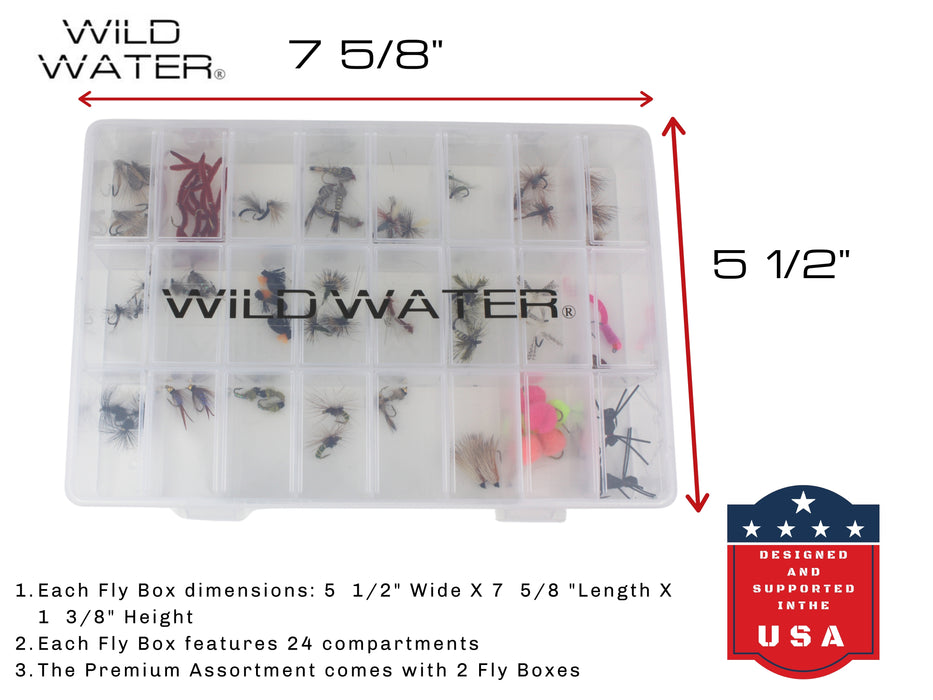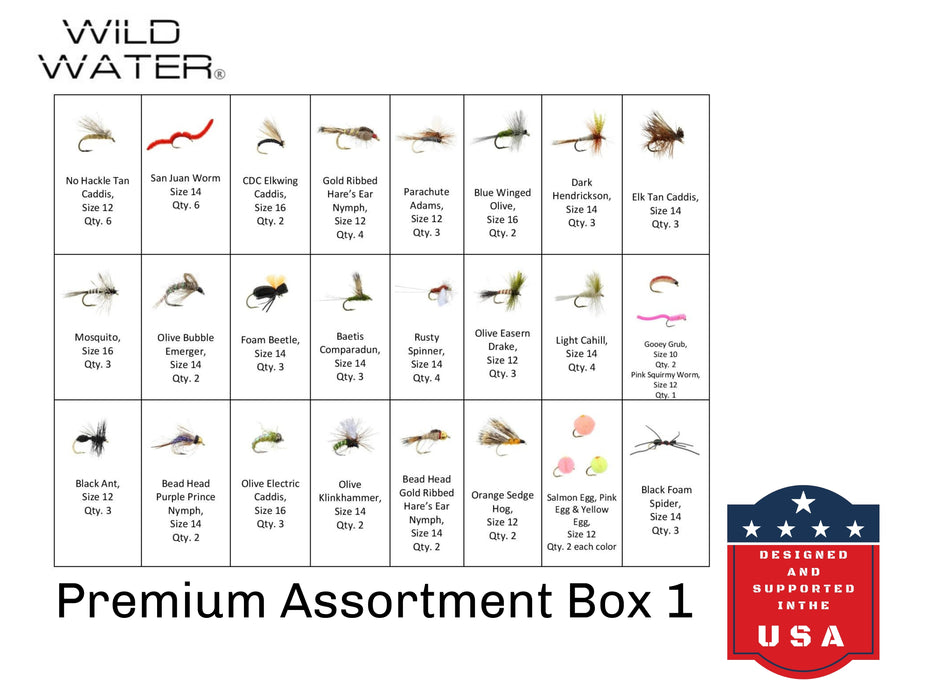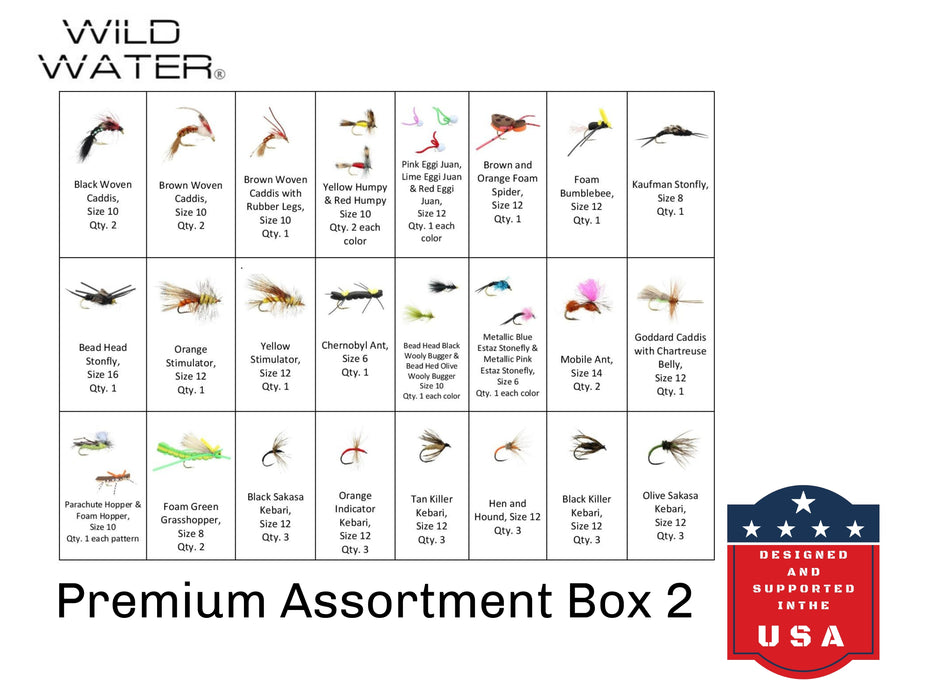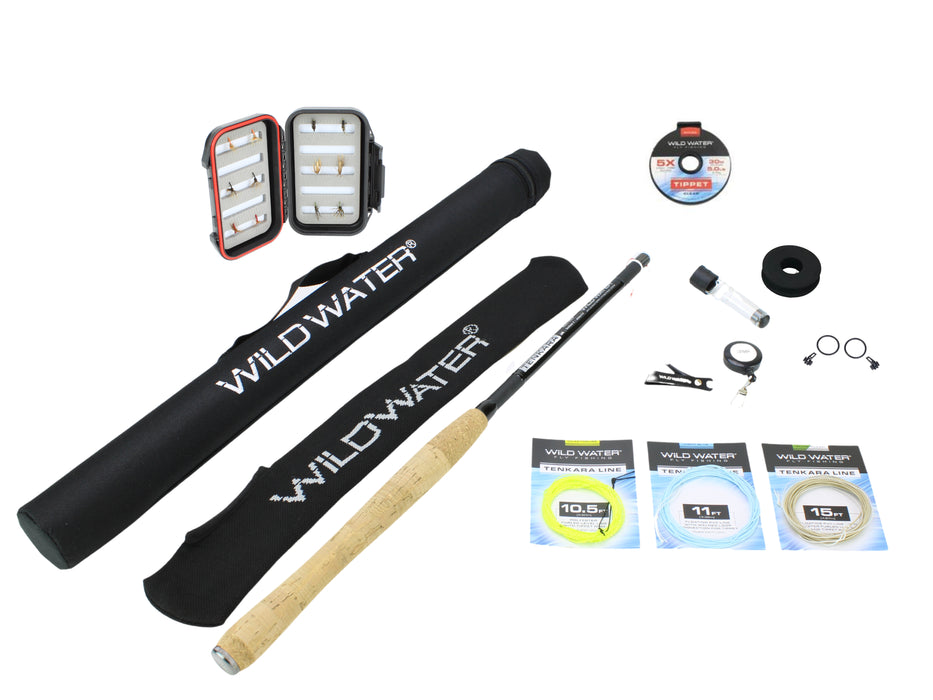
We're here to help you. If you have problems or questions, PLEASE Call 585-967-3474 or email us at contact@wildwaterflyfishing.com
Fly fishing kit setup involves assembling your rod, mounting the reel, stringing the line through the guides, attaching a leader, and tying on a fly. The whole process takes about 10 minutes once you know the steps. A Wild Water starter package includes everything pre-matched, so you're not guessing which components work together.
This guide walks you through what each component does, how to assemble your setup, and which flies to tie on first. By the end, you'll be ready to hit the water.
Key Takeaways
- Rod weight determines what fish you can target. Lighter rods (3-4 weight) excel for delicate presentations on small streams. Medium rods (5-6 weight) handle the widest range of situations. Heavier rods (7-10 weight) throw bigger flies and fight stronger fish.
- Matching components matters more than brand names. A balanced setup where line weight matches rod weight will outcast and outfish expensive gear that's mismatched. Focus on compatibility first, upgrades later.
- Start with versatile fly patterns. A small selection of dry flies, nymphs, and streamers handles 90% of what you'll encounter. You can always expand your fly box over time.
What Comes in a Fly Fishing Kit
Your fly fishing setup includes the fly rod, fly reel, fly line, leader, and tippet. Here's what each piece does.
The Fly Rod
Fly rods use a weight system from 3 to 12, and if you're wondering which one to grab first, go with a 5 weight. It's the Swiss Army knife of fly rods. You can chase small stream trout, toss poppers at panfish, and even swing at modest bass without feeling like you brought the wrong tool.

The standard length is 9 feet, which gives you enough reach and line control for most water. Shorter rods (7 to 8 feet) work better on tight mountain streams where branches limit your backcast. Check out our guide on different types of fly rods for a deeper breakdown.
| Target Species | Rod Weight | Rod Length | Notes |
|---|---|---|---|
| Panfish, small streams | 3-4 weight | 7-8 feet | Shorter rods for tight quarters |
| Trout, creek fishing | 5 weight | 9 feet | Best all-around beginner choice |
| Bass, larger water | 7-8 weight | 9 feet | Handles poppers and streamers |
| Saltwater species | 8-10 weight | 9 feet | Strong drag for big runs |
Each section of the rod connects at ferrules (the alignment points you'll match during assembly). Most modern rods break down into four pieces for easy transport. When assembling, line up the guides so they form a straight path from handle to tip. Our breakdown of parts of a fly rod covers this in detail, and our guides on choosing the perfect fly rod and best fly rods for beginners can help if you want to explore options.
The Fly Reel
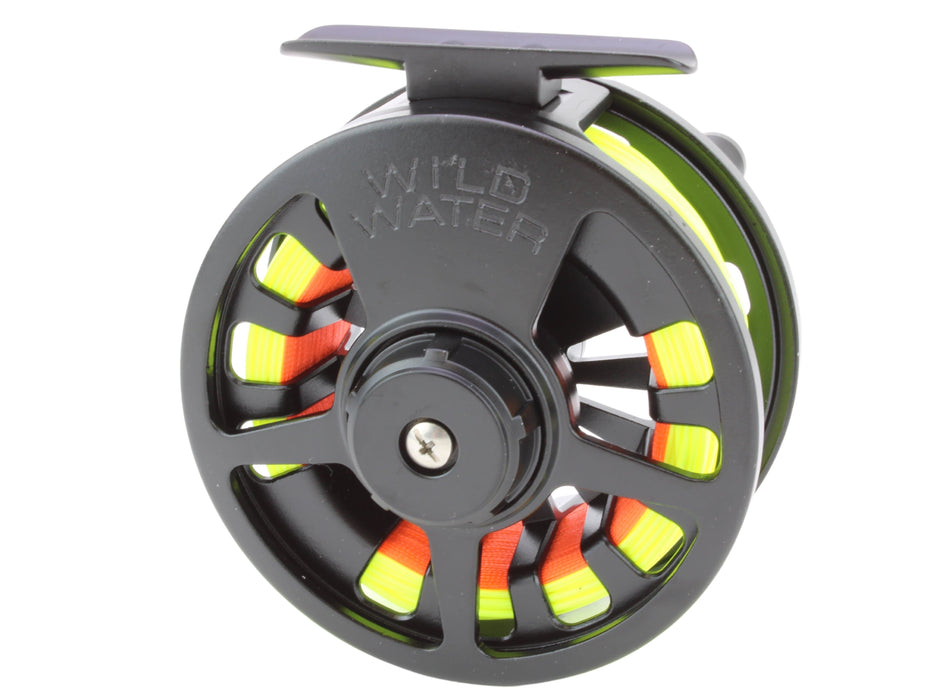
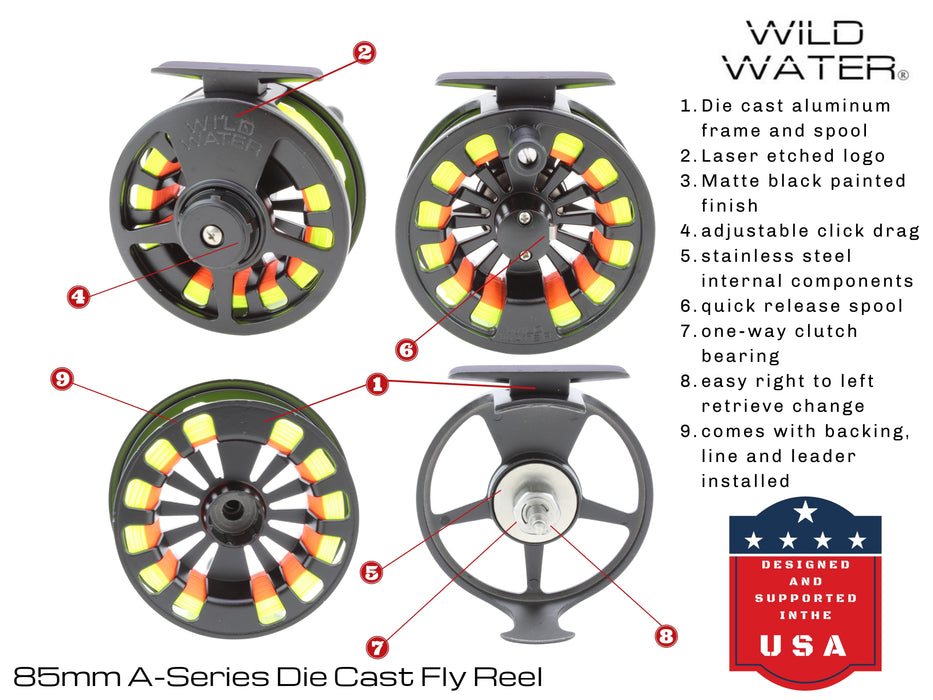
Once you've got the rod figured out, let's talk about what hangs below it. Fly reels does three jobs:
- Holds your line
- Stores your backing
- Provides drag when a fish decides to run
The backing is thin braided line that sits underneath your fly line, giving you extra capacity for long runs. Most trout won't pull you into your backing, but you'll be glad it's there when one does.

Drag systems come in two flavors. Disc drag reels offer smooth, adjustable pressure that helps you tire out big fish without snapping light tippet. Click and pawl designs use a simpler mechanism that creates that classic clicking sound when line pulls off the spool. They work great for panfish and small stream trout where stopping power isn't the priority. Our types of fly reels guide explains each style.
Choose a reel sized to match your rod weight. A 5-6 weight reel pairs with a 5wt rod (the numbers overlap because reels handle a range of line weights). Good news for left handers: the handle can be switched in about two minutes. Most kits ship set up for right hand retrieve. Check out our best fly fishing reels recommendations.
Fly Line, Leader, and Tippet
Your reel holds the line, but the line itself does the heavy lifting when you cast. Here's where things get a little technical, but stick with me.
Fly Fline
Weight forward floating line, also known as a fly line, is standard for beginners because it loads the rod easily and casts without perfect technique. The front section is heavier, which helps turn over your leader and fly. A floating line works for 90% of trout and panfish situations you'll encounter.

One thing that trips up new anglers: your line weight must match your rod weight. A 5 weight line goes on a 5 weight rod. Mismatch them and casting becomes a frustrating mess. The line feels either too heavy (slapping the water) or too light (can't feel the rod load). Our fly line weight guide explains the mechanics.
Leader
Your leader is the clear line between your fly line and your fly. It tapers from thick to thin over about 9 feet, which helps your fly land softly instead of slapping down like a wet noodle. A 4x leader works for most situations. The "x" rating indicates thickness, with higher numbers being thinner and weaker.

Tippet
Tippet is basically expendable leader material that connects directly to your fly. Every time you change flies or break off on a snag, you lose a bit of tippet. Carrying extra spools of 3x, 4x, and 5x means you can fish all day without running short. Our tippet vs leader guide explains the differences.

Step by Step Fly Rod Setup
Now that you know what each component does, let's put it all together. The whole process takes about 10 minutes once you've done it a few times.
Step # 1: Assemble the fly rod
Connect each section by aligning the guides in a straight line. Push and twist gently to seat the ferrules. Don't force anything. See our full guide on assembling the fly rod for photos.
Step # 2: Mount the fly reel
Slide the reel foot into the reel seat (the threaded fitting near the handle) and tighten until snug. The reel should sit below your grip hand. Learn more about attaching the fly reel.
Step # 3: String the fly line
Thread your line through each guide from handle to tip. Pull enough line off the reel to extend past the rod tip, then attach your leader using the loop-to-loop connection that comes pre-tied on most setups. Our guide on setting up a fly fishing outfit covers this in detail.
Step # 4: Tie on your fly
Use a clinch knot to attach your fly to the tippet. It's the most common knot in fly fishing and takes about 30 seconds once you've practiced. See how to tie a clinch knot for step by step instructions.
For reel orientation preferences, check out how to change retrieve direction.
Flies and Accessories
You've got your rod and reel sorted. Now let's talk about what actually catches fish.
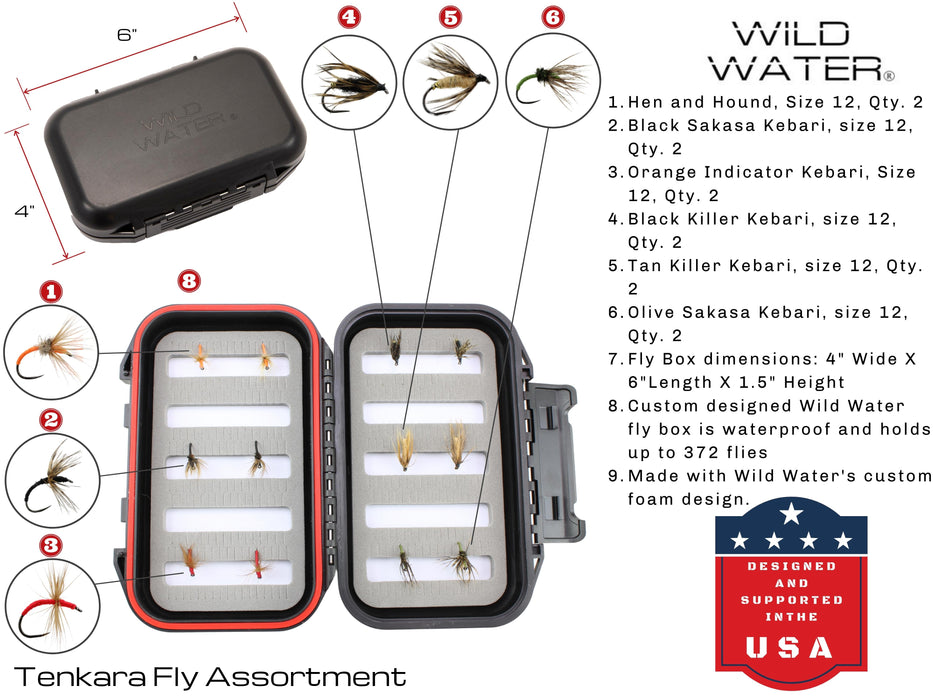
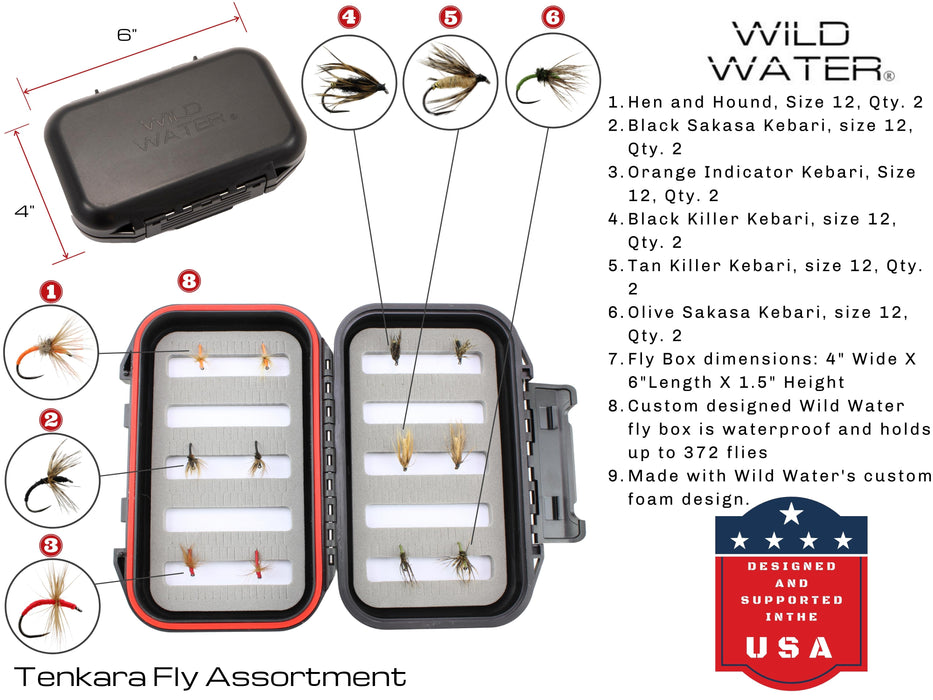
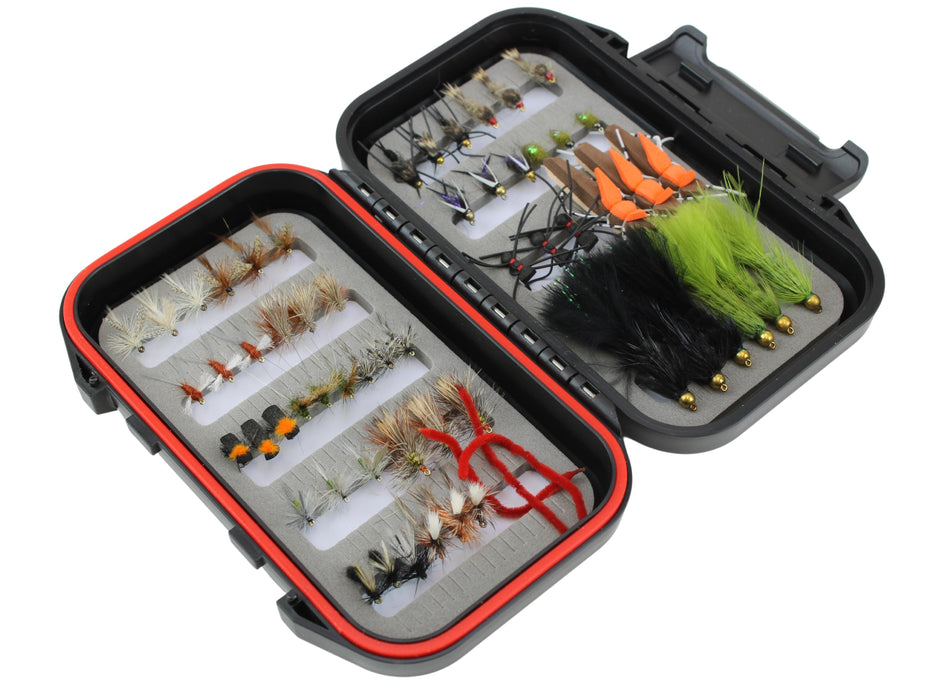
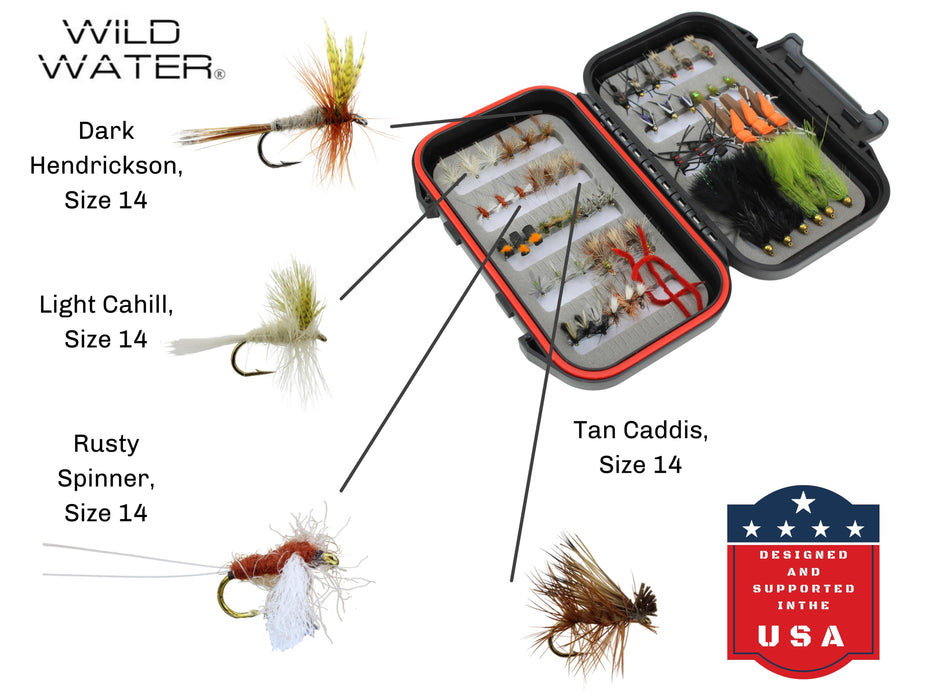
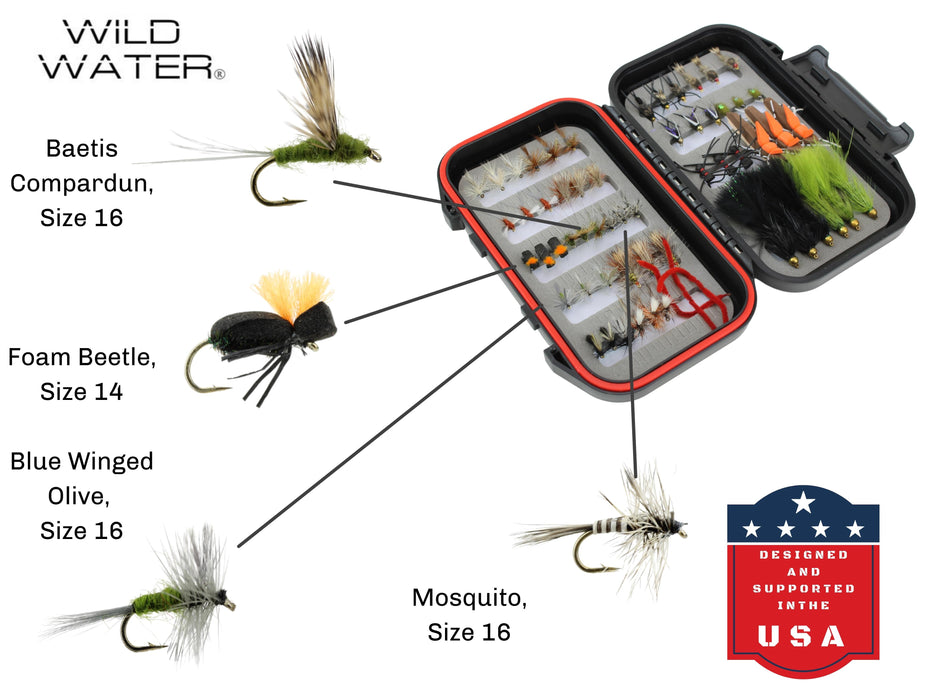
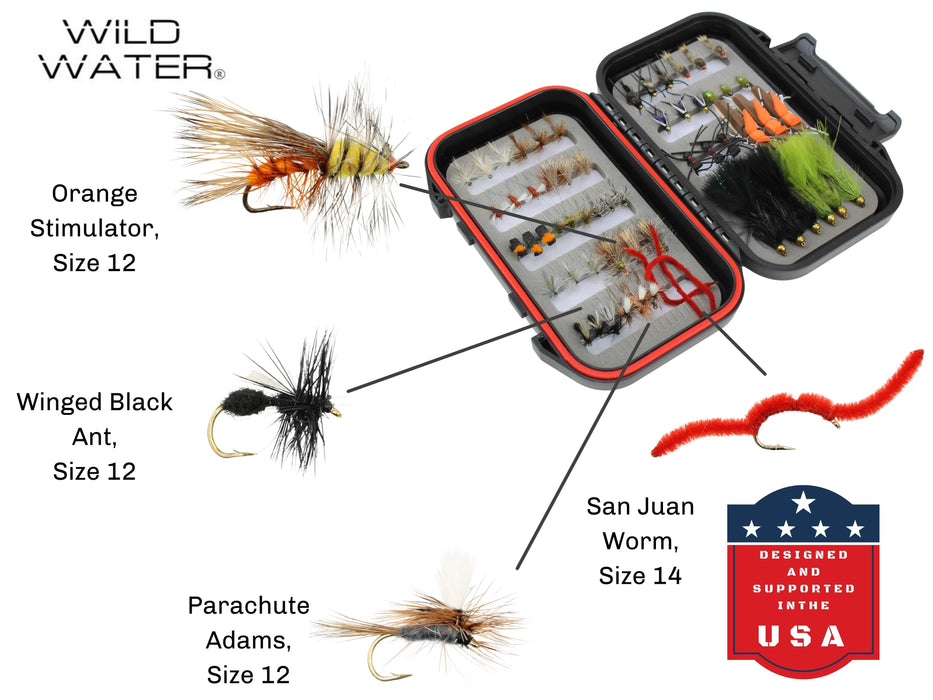
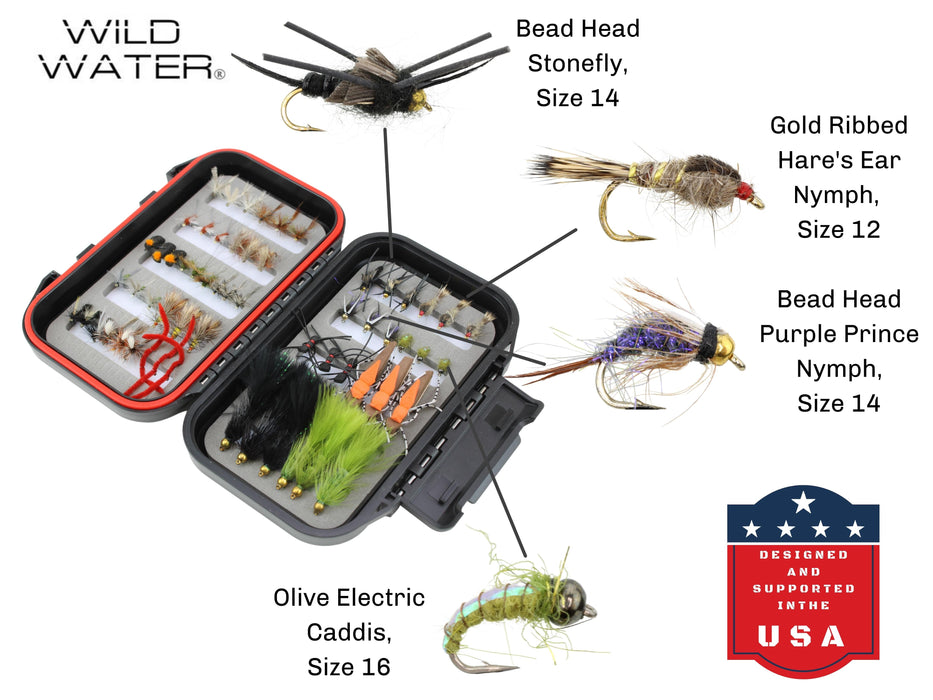
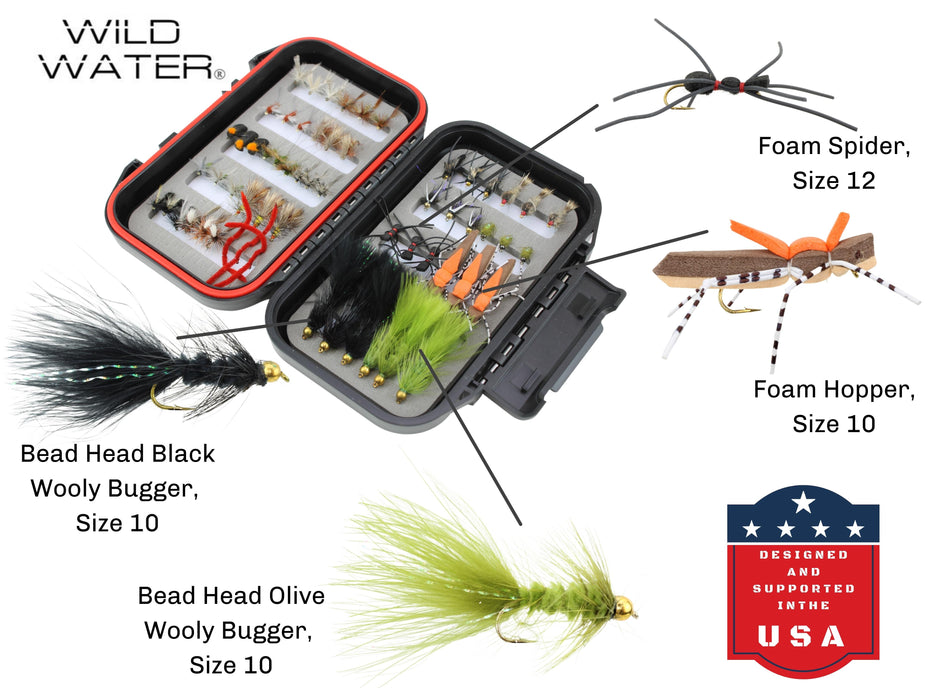
Don't overthink fly selection when you're starting out. Three categories cover almost everything: dry flies, nymphs, and streamers. Before you head out, review our beginner's fly fishing checklist and types of flies overview.
Dry flies
Dry flies float on top and imitate adult insects like mayflies, caddis, and grasshoppers. When fish are rising (breaking the surface to feed), dry flies produce some of the most exciting fishing you'll experience. The Parachute Adams in sizes 12 to 16 works in almost any trout stream situation.
Nymphs
These imitate immature insects underwater and catch more fish than any other fly type. That's not an exaggeration. Trout feed subsurface about 80% of the time. The Pheasant Tail and Hare's Ear are proven patterns that have fooled fish for decades.
Streamers
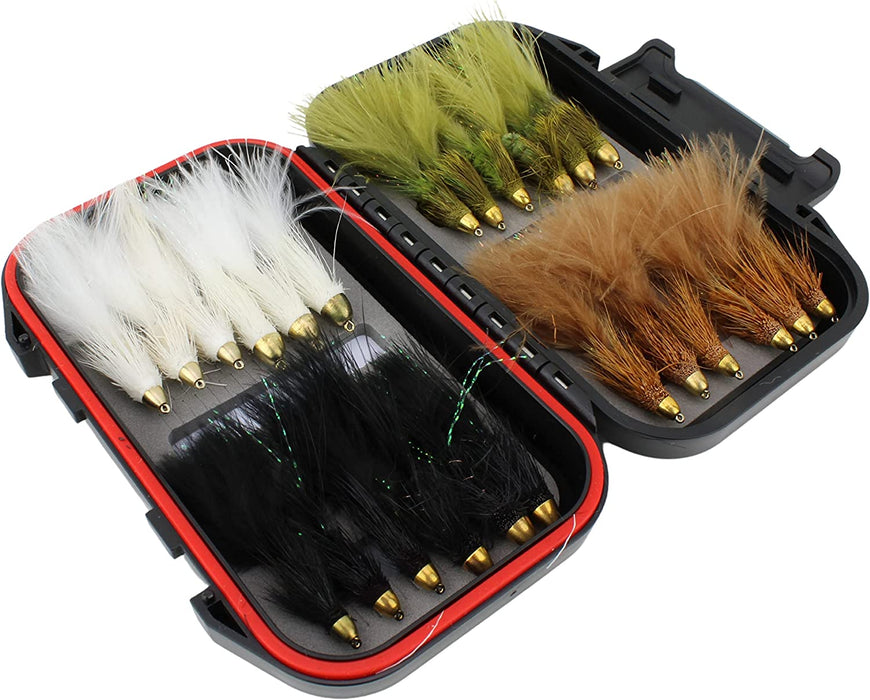
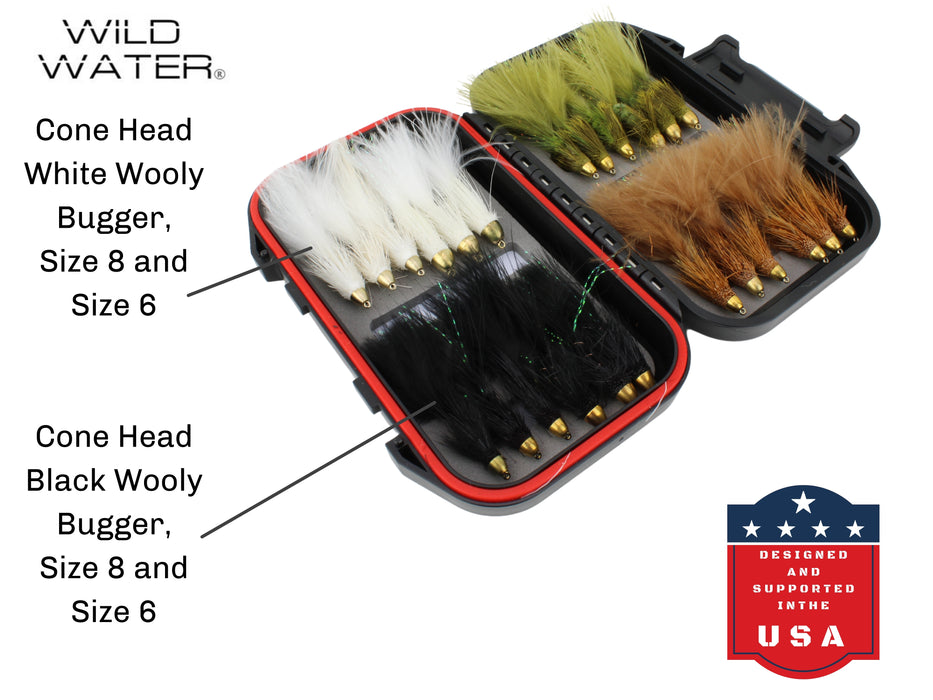
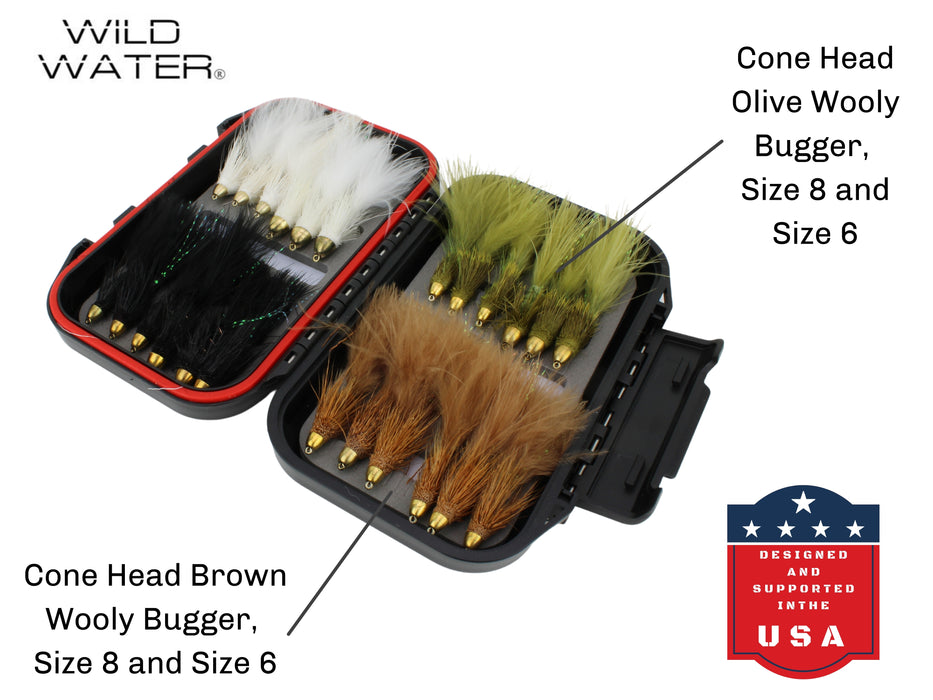
Streamers copy baitfish and trigger aggressive strikes from bigger fish. The Woolly Bugger in black or olive is possibly the most versatile fly ever created. It catches trout, bass, panfish, and just about anything else that swims. Strip it through the water with short, erratic pulls and hold on.
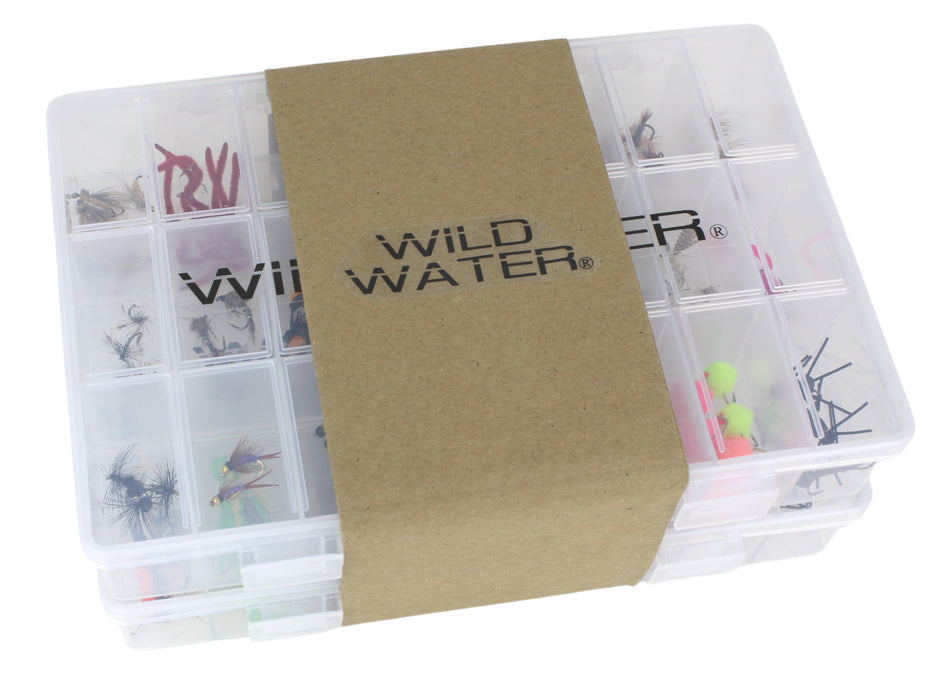
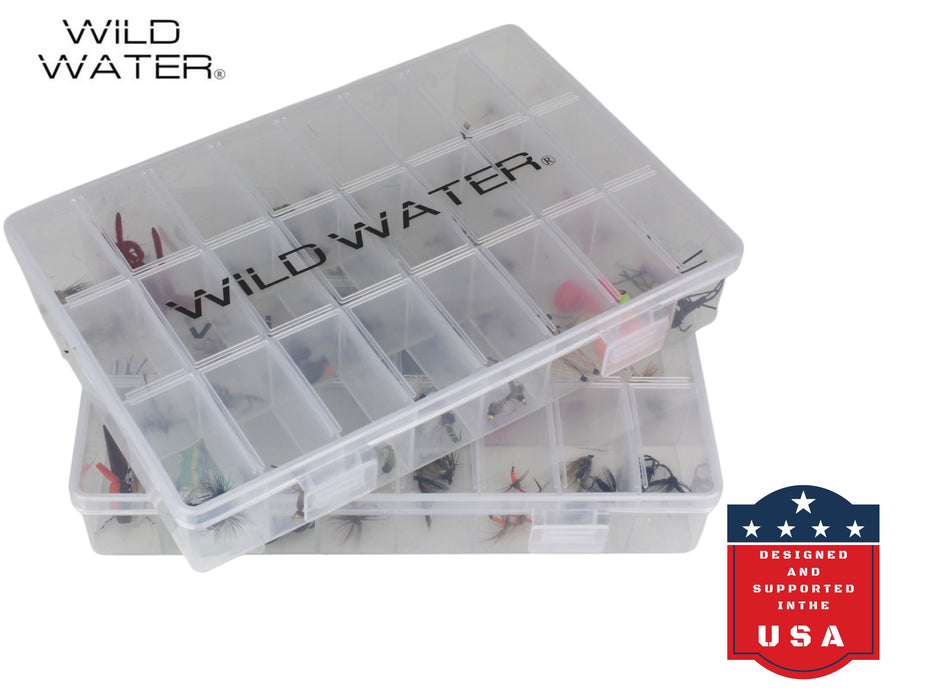
If you're unsure what size to use, start with size 14. It's a safe middle ground. Check out our guides on best dry flies for trout, best trout flies, and best bass flies. Browse our fly assortments to stock your box.

A Few Tools That Actually Matter
You don't need much beyond flies, but a few cheap tools make life easier.
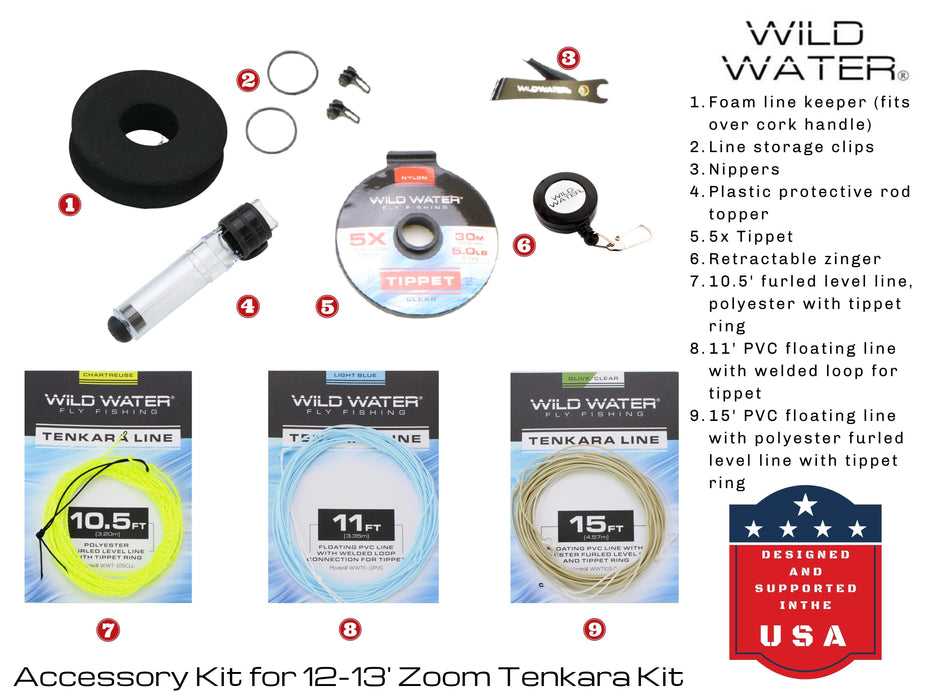
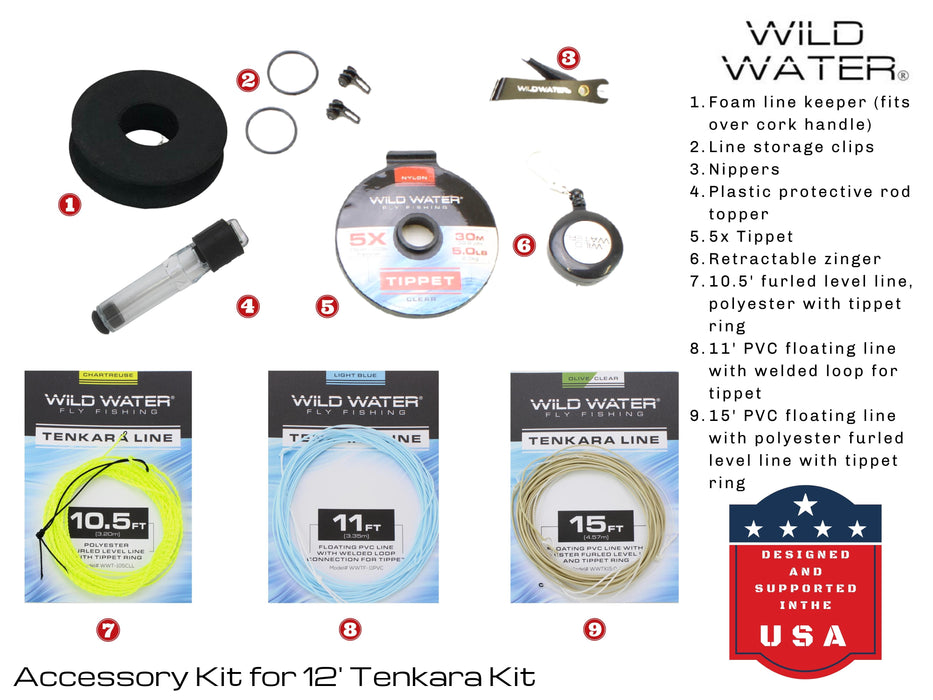
Nippers cut tippet cleanly without fraying. They work much better than teeth (trust me, I've lost fillings) or regular scissors. Forceps help remove hooks from fish mouths safely and are useful for crimping barbs and pinching split shot. A zinger clips to your vest and keeps these tools accessible so you're not digging through pockets mid-stream.
Polarized sunglasses cut surface glare so you can see fish, underwater structure, and where to wade safely. Honestly, they're more important than any fly pattern you'll buy.
Grab tools from our fly fishing tools collection. When the day ends, proper storage extends gear life. See storing your fly fishing outfit for tips.
Get Started with Wild Water Fly Fishing Kits
So where do you get all this gear without piecing it together yourself?
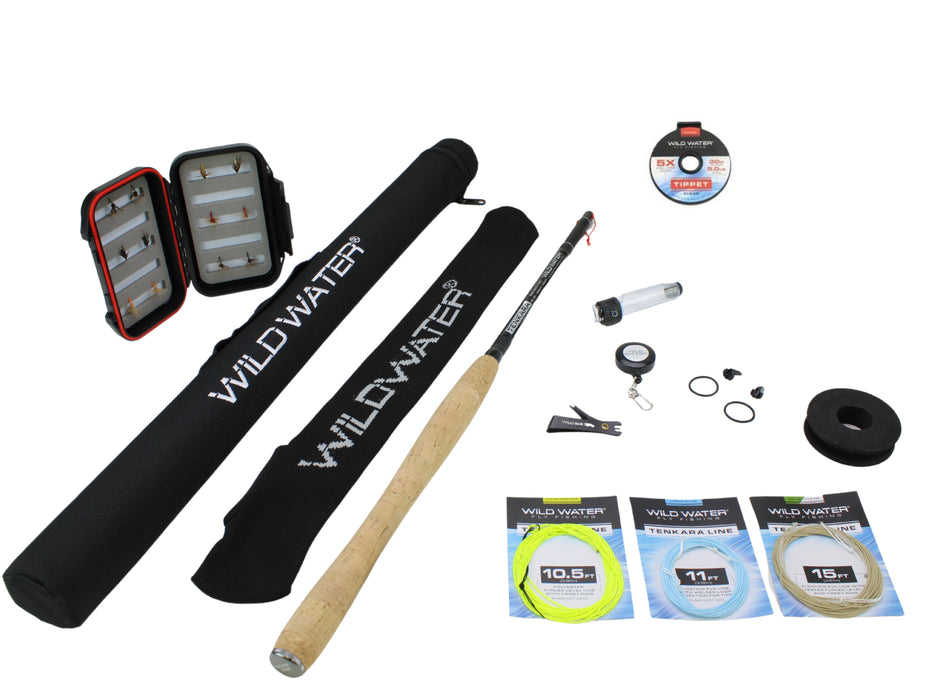
Wild Water kits include the fly rod, reel, floating line, backing, leader, and flies. Every component is matched and tested together, so you open the case, assemble your rod, and start casting. No scrambling to figure out what fits.
Standard, Deluxe, and CNC Reel packages offer options for every budget. Standard kits deliver reliable performance at entry level prices. Deluxe packages add upgraded components and more flies. CNC Reel kits feature machined aluminum reels with smooth disc drag systems. Compare them all in our best fly fishing starter kits breakdown, or use our starter package selection guide to pick the right kit.
Lifetime warranty on all rods means you're covered when accidents happen. Trees, car doors, and enthusiastic dogs have claimed countless rod tips. We get it.
U.S. based customer support at 585-967-3474 answers questions about fly selection, setup, and casting. We've helped thousands of new fly anglers get on the water. Learn more about Wild Water and how we started.
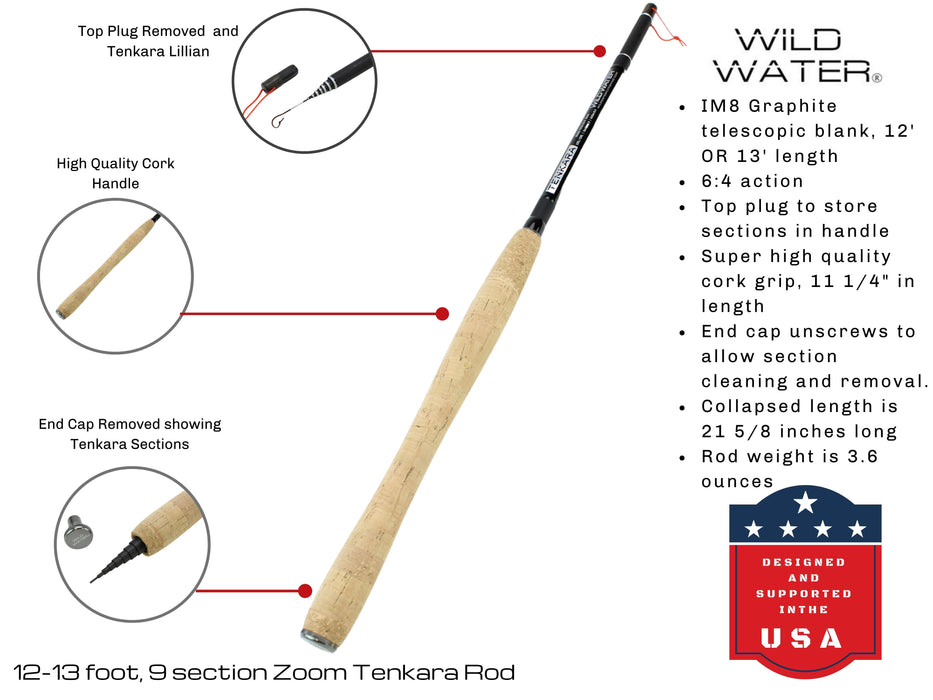
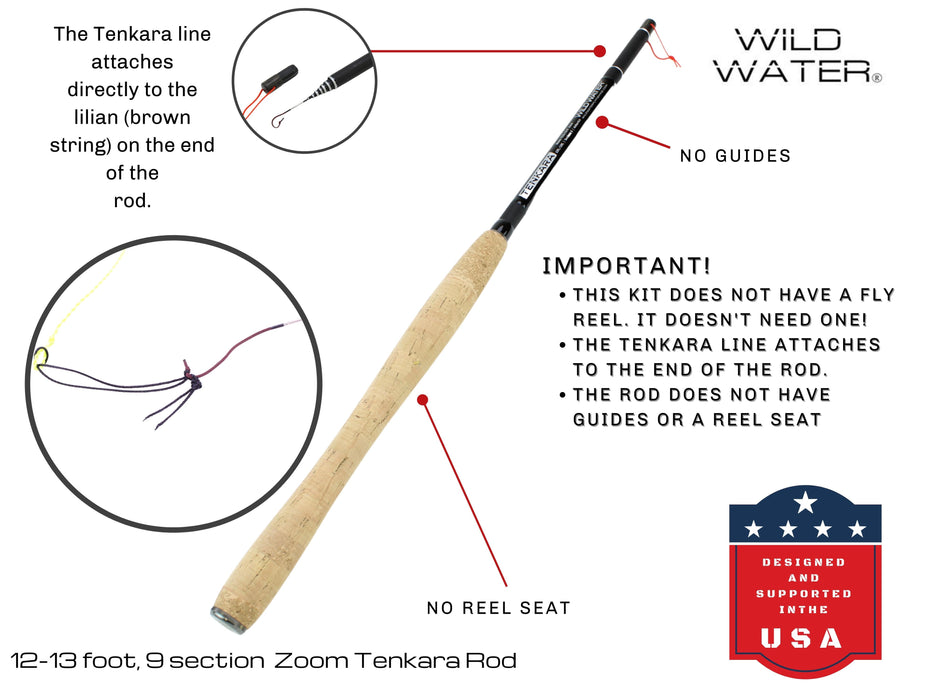
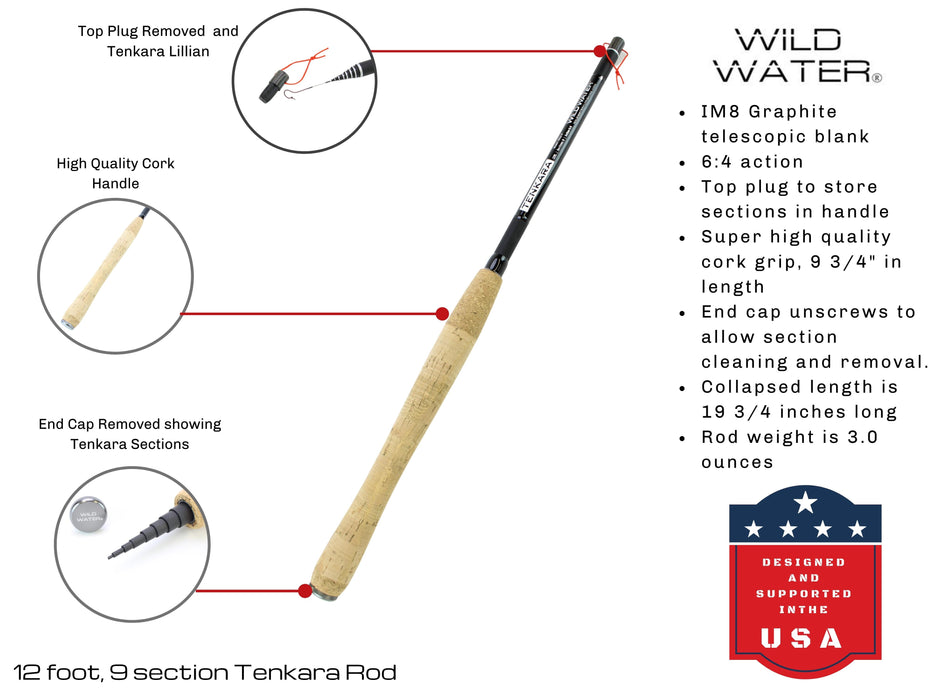
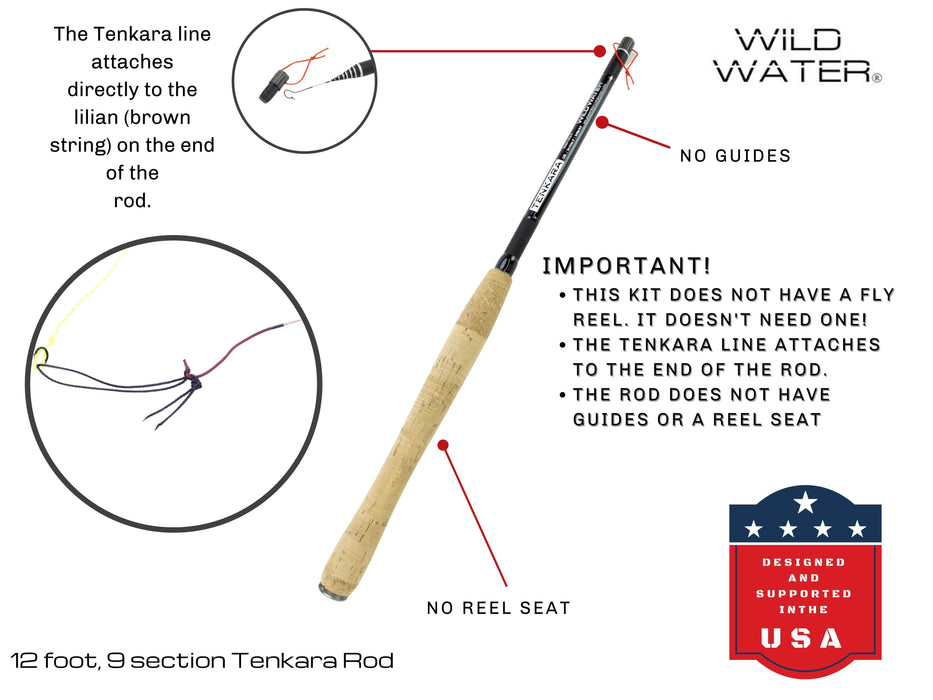
Note: For Tenkara setup instructions, visit our Getting Started with Tenkara guide.
FAQs About Fly Fishing Setup
How much should I spend on my first fly fishing rod?
Budget $100 to $250 for a quality rod and reel combo. Avoid ultra cheap options under $50 since they often have poor components that make casting frustrating. Wild Water kits in this range include everything you need without overspending on gear you'll outgrow.
Can I use a spinning rod for fly fishing?
No. Spinning rods cast weighted lures while fly rods cast the weight of the line itself. The mechanics are completely different. Fly rods use a back and forth motion to load the line, while spinning rods rely on lure weight to pull line off the reel. You need a dedicated fly setup.
When should I upgrade to a second rod?
Add a second outfit when you start targeting different species or fishing different water regularly. If you're catching trout on a 5 weight but want to chase bass with poppers, a 7-8 weight opens up that fishery. Most fly anglers end up with 2 to 3 outfits over time.
What happens if my line weight doesn't match my rod?
Mismatched line makes casting significantly harder. Too heavy and the rod overloads, causing the line to slap the water. Too light and the rod won't flex enough to generate power. Check the markings near your rod handle (it'll say "5wt" or similar) and make sure your line matches.
Where can I practice casting before fishing?
Any open grass area works. Parks, backyards, and sports fields give you room to work on your timing without worrying about obstacles. Tie on a piece of yarn instead of a fly so you don't hook yourself or the neighbor's dog.